



On this International Day of Zero Tolerance for Female Genital Mutilation, IPPF reaffirms its commitment to collective action to ensure that women and girls in the region can live free from Female Genital Mutilation (FGM) and that no one is left behind. The threats to the rights and safety of women and girls globally have increased significantly over the years.
Now more than ever, we must continue pushing forward together, working alongside local community members and regional and global partners, to uphold the sexual and reproductive health and rights of all women and girls. All women and girls deserve to thrive safely, freely, and with full rights over their bodies, health, and well-being.
IPPF Framework to Accelerate the Elimination of FGM
In line with this vision, IPPF established its Centre of Excellence in Mauritania, located in IPPF Arab World Region (AWR), with the mission to eliminate FGM through a range of strategies. These include supporting research efforts, leading media and educational initiatives, providing quality healthcare and sexual and reproductive health services, gathering evidence, and mobilising the energy of youth and influential groups globally, both in stable contexts and in humanitarian settings.
The IPPF Framework to Accelerate the Elimination of FGM five (5) intervention areas are supported, implemented, and led globally by the Centre of Excellence, namely Social Change, Advocacy, Partnership, Provision of Services, and Accurate Documentation.
when
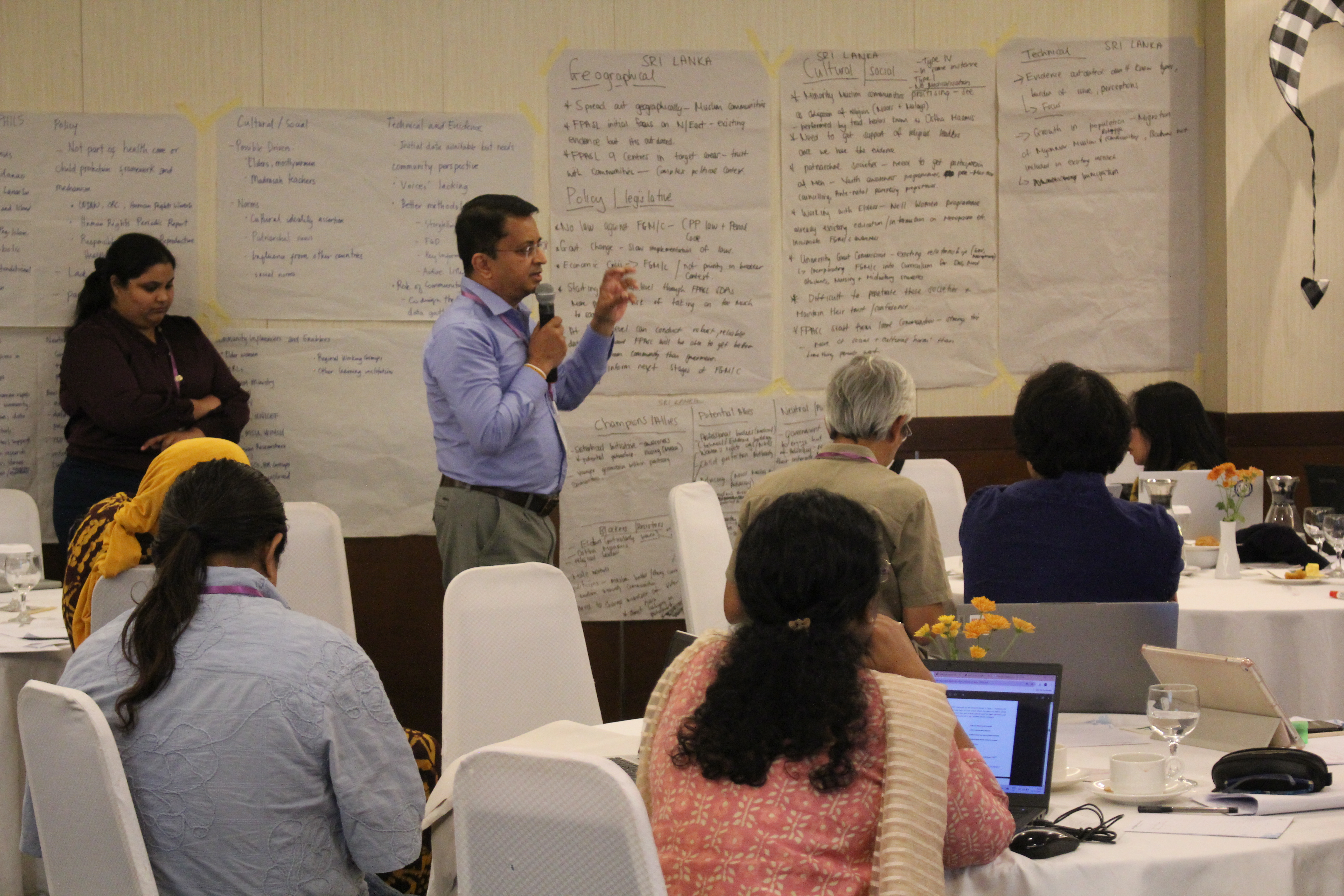
FGMC Workshop
IPPF ESEAORFemale Genital Mutilation/Cutting (FGM/C) in Asia
According to the World Health Organization (WHO), FGM comprises “all procedures that involve partial or total removal of the external female genitalia, or other injury to the female genital organs for non-medical reasons." [1]
An estimated 80 million girls in Asia have experienced some form of FGM/C, according to UNICEF. [2] The harmful practice of FGM/C threatens a girl’s bodily autonomy, health and well-being. Despite this, the practice continues to persist, often under the misnomer of ‘female circumcision’. These practices are sometimes justified by the false belief that the types of FGM/C practised in the region - such as pricking, cutting and symbolic practices like washing or swiping the clitoris with turmeric- do not amount to ‘mutilation’ and are therefore harmless. However, all forms of FGM/C are violations of bodily autonomy and human rights. These practices are rooted in gender inequality and the control of women’s and girls’ bodies.
In recent years, the practice has gained false legitimacy through the rise of medicalisation of FGM/C, with an increasing number of medical doctors offering and promoting their services under the guise of providing a ‘safer, less harmful’ option. IPPF maintains that FGM/C is in and of itself harmful, in any type, shape or form.
Medicalised FGM/C produces no medical benefits, violates the principle of ‘do no harm’, and lends dangerous legitimacy to the practice—paving the way for more harmful forms under the false guise of ‘safety’. No practice that infringes on the rights to health, dignity and freedom from violence can be justified.
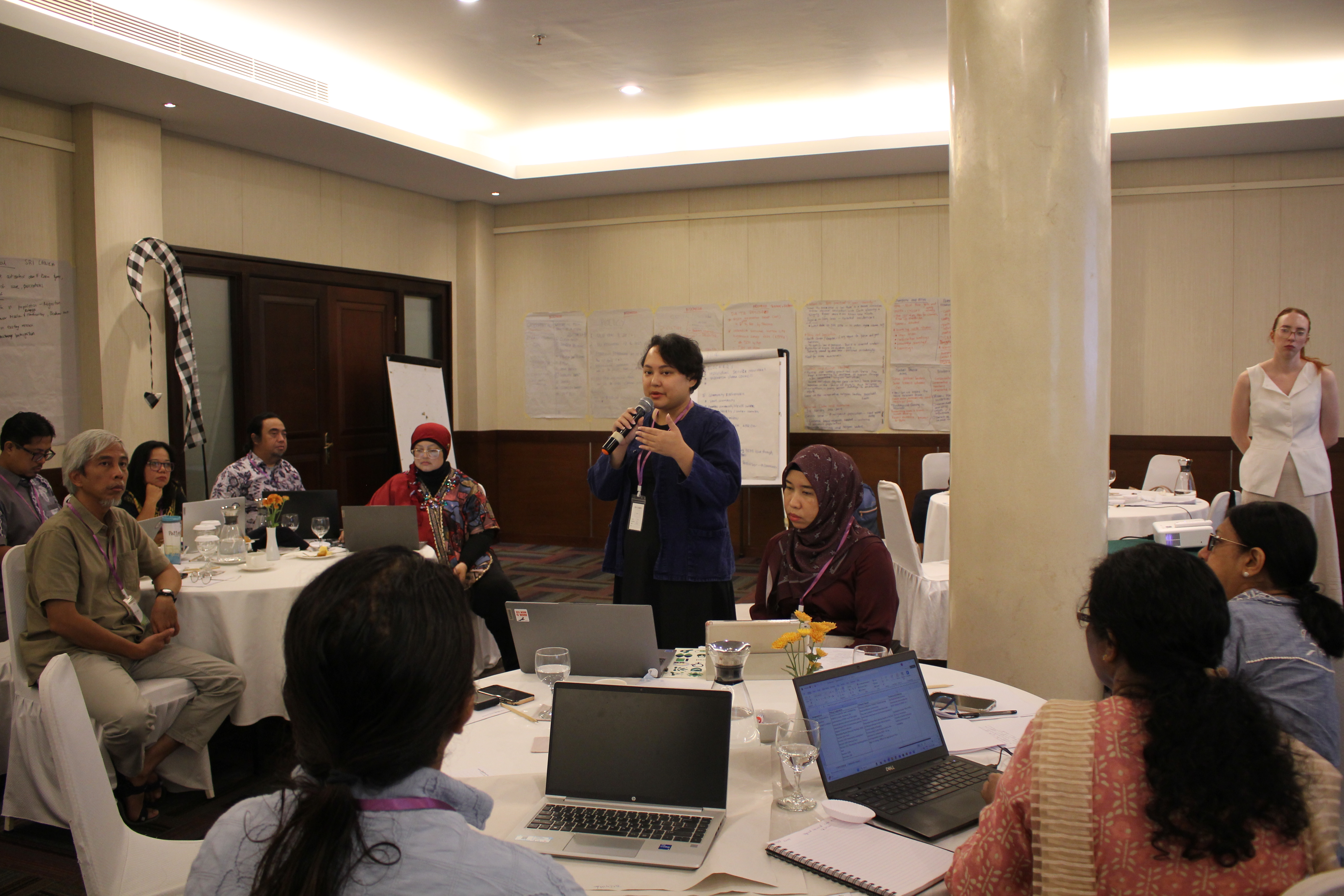
FGMC Workshop
IPPF ESEAOROur Collective Commitment to Eliminating FGM/C in Southeast Asia and South Asia
In July 2025, six (6) IPPF Member Associations (MAs) from Indonesia, Philippines, Thailand, Sri Lanka, India and Maldives [3] came together in Bali, Indonesia, for the first IPPF ESEAOR & SAR Regional FGM/C Workshop. The Workshop aimed to build stronger capacities, develop foundational strategies and strengthen strategic partnerships to eliminate the harmful practice of FGM/C in the two regions. IPPF ESEAOR and SAR Regional Director, Tomoko Fukuda, in her opening speech, highlighted gaps in data, statistics and community-informed evidence on the prevalence of FGM/C across the regions, largely due to competing priorities and insufficient funding, which allowed FGM/C to persist, and in some cases, even flourish. By the end of the Workshop, all six MAs affirmed their commitment to ending FGM/C across both regions, with support from IPPF AWR and the IPPF Centre of Excellence on FGM.
This initiative, supported by Australian Government Department for Foreign Affairs and Trade (DFAT), aligns with IPPF’s global goal of creating a world where women and girls thrive free from harmful practices that threaten their rights, health, and wellbeing. DFAT’s timely and crucial investment in eliminating FGM/C in the two regions is laying the foundation for IPPF to accelerate this work, both with and for affected communities. It enables IPPF to focus on the foundational and essential efforts needed to address the practice of FGM/C within local contexts, social norms and sensitivities; build community-informed evidence; and strengthen capacities of service providers—including village midwives, community nurses, and medical doctors—as well as key stakeholders. Through this, IPPF shall advocate and collaborate to shift harmful norms that sustain the practice and work toward eliminating FGM/C at its root.
As part of our commitment to eliminating FGM/C in the South and Southeast Asia regions, we launched the Regional FGM/C Initiative in the fourth quarter of 2025. The Initiative maintains a strong focus on the prevention of FGM/C through four key project themes: raising awareness and promoting behaviour change; building evidence; conducting and supporting advocacy against FGM/C; and building the capacity of service providers to address FGM/C.
IPPF’s Regional FGM/C Initiative is supported DFAT under the Towards Universal SRHR in the Indo Pacific (TUSIP) Initiative, RESPOND Phase II Program. The initiative will be implemented by IPPF’s Member Associations in Indonesia, Thailand, Philippines, Sri Lanka, India, Maldives and Malaysia from October 2025 – June 2028, and works closely with TUSIP collaborating partners, UNFPA and UNICEF.
Footnotes:
[1] WHO, Factsheet on Female genital mutilation, 31 January 2025, https://www.who.int/news-room/fact-sheets/detail/female-genital-mutilation
[2] UNICEF, Female genital mutilation (FGM), 1 March 2025, https://data.unicef.org/topic/child-protection/female-genital-mutilation/#status
[3] Participants included the following IPPF Member Associations: Indonesian Planned Parenthood Association (IPPA), Family Planning Organization of the Philippines (FPOP), Planned Parenthood Association of Thailand (PPAT), Family Planning Association of Sri Lanka (FPASL), Family Planning Association of India (FPAI) and Society for Health Education (SHE) Maldives.

FGMC Workshop
IPPF ESEAOR