



Spotlight
A selection of resources from across the Federation

Cook Islands, New Zealand
Resource
Ora’anga Meitaki no te Vainetini: Cook Islands Women’s Wellbeing in the Context of Abortion
In 2022, research on abortion, including unsafe abortion, in Cook Islands was conducted by the University of New South Wales, University of the South Pacific Cook Islands Campus Te Puna Vai Mārama | Centre for Research, and Cook Islands Family Welfare Association (CIFWA). Ora’anga Meitaki no te Vainetini: Cook Islands Women’s Wellbeing in the Context of Abortion includes the lived experiences and stories of women, advocates, support persons and health workers in the Cook Islands and Aotearoa New Zealand.
Filter our resources by:


Resource
| 16 December 2025
Gender Equality, Disability and Social Inclusion (GEDSI) analyses for nine (9) Pacific Member Associations
The International Planned Parenthood Federation (IPPF) is a global movement of over 100 locally led Member Associations working in more than 150 countries to advance Sexual and Reproductive Health, Rights, and Justice (SRHRJ). In the Pacific, IPPF’s Sub-Regional Office is implementing the Pacific Niu Vaka Strategy Phase II (2023–2028), which prioritises Gender Equality, Disability and Social Inclusion (GEDSI) across Member Associations. In 2025, IPPF supported eight Pacific Member Associations from Fiji, Kiribati, Papua New Guinea, Samoa, Solomon Islands, Tonga, Tuvalu, and Vanuatu to complete a GEDSI analysis, building on a 2023 pilot with the Cook Islands Family Welfare Association. The revised GEDSI tools use a five-step process, including self-assessment, baseline scoring, action planning, and stakeholder consultation, to track progress over time. All nine Pacific Member Associations scored above 50% in their baseline GEDSI self-assessments, demonstrating active engagement with inclusion principles. Member Associations in the Cook Islands, Kiribati, and Samoa scored above 80%, reflecting strong organisational integration of GEDSI across programmes and services. Gender equality scored highest overall, while disability inclusion emerged as a key area for strengthening across the region. A total of 218 participants from 106 organisations took part in GEDSI and SRHR stakeholder consultations across nine Pacific countries, strengthening locally grounded analysis and action planning. These assessments have enhanced understanding of how gender, power, and social inclusion shape access to SRHR services. The GEDSI analyses mark an important first step. Sustained investment in human and financial resources over the next three years will be essential to implement action plans and demonstrate measurable progress when the assessments are repeated in 2028. This work contributes to the Pacific Niu Vaka Strategy Phase II results framework and is co-funded through the Pacific Women Lead programme with support from the Australian Department of Foreign Affairs and Trade (DFAT) and the New Zealand Ministry of Foreign Affairs and Trade (MFAT).
Resource
| 16 December 2025
Gender Equality, Disability and Social Inclusion (GEDSI) analyses for nine (9) Pacific Member Associations
The International Planned Parenthood Federation (IPPF) is a global movement of over 100 locally led Member Associations working in more than 150 countries to advance Sexual and Reproductive Health, Rights, and Justice (SRHRJ). In the Pacific, IPPF’s Sub-Regional Office is implementing the Pacific Niu Vaka Strategy Phase II (2023–2028), which prioritises Gender Equality, Disability and Social Inclusion (GEDSI) across Member Associations. In 2025, IPPF supported eight Pacific Member Associations from Fiji, Kiribati, Papua New Guinea, Samoa, Solomon Islands, Tonga, Tuvalu, and Vanuatu to complete a GEDSI analysis, building on a 2023 pilot with the Cook Islands Family Welfare Association. The revised GEDSI tools use a five-step process, including self-assessment, baseline scoring, action planning, and stakeholder consultation, to track progress over time. All nine Pacific Member Associations scored above 50% in their baseline GEDSI self-assessments, demonstrating active engagement with inclusion principles. Member Associations in the Cook Islands, Kiribati, and Samoa scored above 80%, reflecting strong organisational integration of GEDSI across programmes and services. Gender equality scored highest overall, while disability inclusion emerged as a key area for strengthening across the region. A total of 218 participants from 106 organisations took part in GEDSI and SRHR stakeholder consultations across nine Pacific countries, strengthening locally grounded analysis and action planning. These assessments have enhanced understanding of how gender, power, and social inclusion shape access to SRHR services. The GEDSI analyses mark an important first step. Sustained investment in human and financial resources over the next three years will be essential to implement action plans and demonstrate measurable progress when the assessments are repeated in 2028. This work contributes to the Pacific Niu Vaka Strategy Phase II results framework and is co-funded through the Pacific Women Lead programme with support from the Australian Department of Foreign Affairs and Trade (DFAT) and the New Zealand Ministry of Foreign Affairs and Trade (MFAT).

Resource
| 26 November 2025
Research: How religious, cultural, and traditional practices influence access to sexual and reproductive health and rights in Fiji
A community-based research conducted across urban, peri-urban, rural and maritime settings, and captures the voices and experiences of youth, women, sex workers, and people with disabilities. Key messages from the research findings include Advancing SRHR reform strengthens families, builds safer communities, and drives national economic growth. Failure to act perpetuates cycles of violence, illness, exclusion, and intergenerational poverty, leaving teenagers alone to struggle with silence, stigma, and shame. Fiji already has local champions and effective, home-grown solutions—what’s needed is greater support and sustained investment. Timely SRHR reforms will yield measurable improvements in health, social well-being, and economic prosperity. By embracing rights-based, culturally grounded SRHR policies, Fiji can position itself as a regional leader and role model.
Resource
| 27 November 2025
Research: How religious, cultural, and traditional practices influence access to sexual and reproductive health and rights in Fiji
A community-based research conducted across urban, peri-urban, rural and maritime settings, and captures the voices and experiences of youth, women, sex workers, and people with disabilities. Key messages from the research findings include Advancing SRHR reform strengthens families, builds safer communities, and drives national economic growth. Failure to act perpetuates cycles of violence, illness, exclusion, and intergenerational poverty, leaving teenagers alone to struggle with silence, stigma, and shame. Fiji already has local champions and effective, home-grown solutions—what’s needed is greater support and sustained investment. Timely SRHR reforms will yield measurable improvements in health, social well-being, and economic prosperity. By embracing rights-based, culturally grounded SRHR policies, Fiji can position itself as a regional leader and role model.
Resource
| 18 June 2025
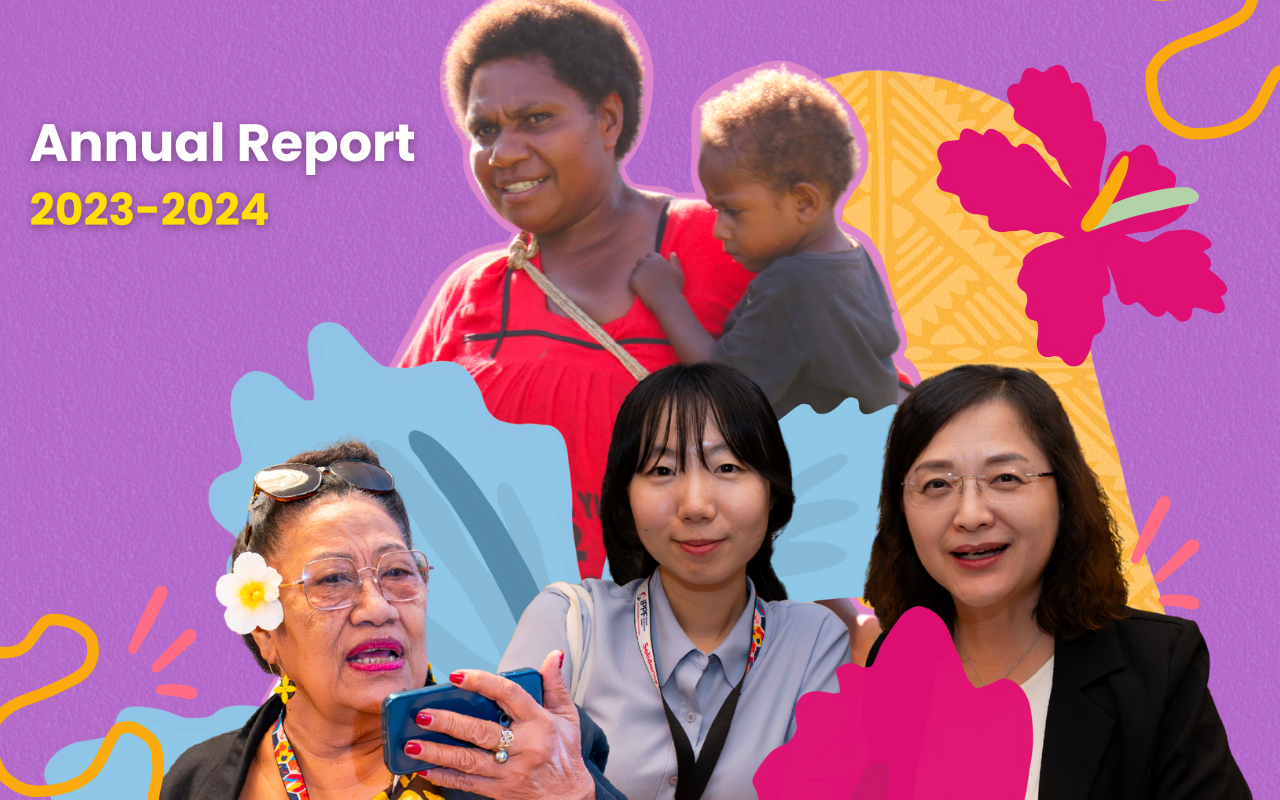
Annual Report 2023-2024
This year’s annual report captures a powerful year of action, resilience, and care across East and Southeast Asia and the Pacific. Despite rising challenges, IPPF ESEAOR and its Member Associations delivered over 13 million SRHR services, expanded access for youth and marginalised groups, deepened community partnerships, and pushed for policy change across 24 countries. Grounded in the Come Together strategy, the report celebrates feminist solidarity, youth leadership, climate-resilient healthcare, and bold innovation in the face of growing anti-rights movements.
Resource
| 09 June 2025
Annual Report 2023-2024
This year’s annual report captures a powerful year of action, resilience, and care across East and Southeast Asia and the Pacific. Despite rising challenges, IPPF ESEAOR and its Member Associations delivered over 13 million SRHR services, expanded access for youth and marginalised groups, deepened community partnerships, and pushed for policy change across 24 countries. Grounded in the Come Together strategy, the report celebrates feminist solidarity, youth leadership, climate-resilient healthcare, and bold innovation in the face of growing anti-rights movements.

Resource
| 09 June 2025
Pacific Niu Vaka Strategy: 2024 Annual Report
Niu Vaka Strategy: Driving Sustainable SRHR Progress in the Pacific Now in its second phase, the Pacific Niu Vaka Strategy continues to deliver locally led, sustainable sexual and reproductive health and rights (SRHR) services across the region. At the heart of the strategy is IPPF’s commitment to inclusive, resilient, and community-rooted action, ensuring that those most marginalised and excluded can access the care and information they need. Local Leadership, Real Results IPPF’s unique, localised approach remains central to achieving lasting impact. Member Associations (MAs) are trusted by their communities and have a profound understanding of the social and cultural challenges faced by women, girls, and marginalised groups. In 2024 alone, Pacific MAs delivered over 507,000 SRH services to more than 126,000 clients – 70% of whom were women and girls, and 35% under the age of 25. These services were provided through a combination of static clinics (59%), mobile outreach (35%), and community-based distribution (6%). A Multi-layered, People-First Strategy Building on the lessons from Phase I, Niu Vaka II continues to prioritise reaching the most underserved populations, elevating youth voices, and harnessing partnerships to advocate for systemic change. Key focus areas for 2024 include: Strengthening regional partnerships and advocacy to increase the visibility of IPPF and MAs Amplifying youth voices, including the launch of the Pacific SRHR Youth Network – Youth OCEANS Enhancing MA funding compliance and financial processes Building national capacity to deliver essential training in SGBV and humanitarian SRH care (MISP) Youth at the Forefront Young people constitute nearly a quarter of the Pacific’s population, many of whom experience unmet SRHR needs. In a significant milestone, the region launched Youth OCEANS – the first Pacific-wide sexual and reproductive health and rights (SRHR) youth network – during its inaugural convening in Fiji in August 2024. Youth leaders from nine countries came together to establish a leadership committee, outline priorities, and create a clear path forward for advocacy. Additional funding from Pacific Women Lead at the Pacific Community (SPC) programme will support the network’s expansion in 2025. Looking Ahead In a rapidly evolving global and regional context, IPPF Pacific remains focused on inclusive, resilient, and adaptive SRHR programming. By linking humanitarian and development efforts, championing local leadership, and centring the voices of women, young people, and marginalised communities, Niu Vaka continues to deliver tangible progress for everyone in the Pacific. This work is made possible by the ongoing support of the Australian Department of Foreign Affairs and Trade (DFAT) and the New Zealand Ministry of Foreign Affairs and Trade (MFAT).
Resource
| 14 June 2026
Pacific Niu Vaka Strategy: 2024 Annual Report
Niu Vaka Strategy: Driving Sustainable SRHR Progress in the Pacific Now in its second phase, the Pacific Niu Vaka Strategy continues to deliver locally led, sustainable sexual and reproductive health and rights (SRHR) services across the region. At the heart of the strategy is IPPF’s commitment to inclusive, resilient, and community-rooted action, ensuring that those most marginalised and excluded can access the care and information they need. Local Leadership, Real Results IPPF’s unique, localised approach remains central to achieving lasting impact. Member Associations (MAs) are trusted by their communities and have a profound understanding of the social and cultural challenges faced by women, girls, and marginalised groups. In 2024 alone, Pacific MAs delivered over 507,000 SRH services to more than 126,000 clients – 70% of whom were women and girls, and 35% under the age of 25. These services were provided through a combination of static clinics (59%), mobile outreach (35%), and community-based distribution (6%). A Multi-layered, People-First Strategy Building on the lessons from Phase I, Niu Vaka II continues to prioritise reaching the most underserved populations, elevating youth voices, and harnessing partnerships to advocate for systemic change. Key focus areas for 2024 include: Strengthening regional partnerships and advocacy to increase the visibility of IPPF and MAs Amplifying youth voices, including the launch of the Pacific SRHR Youth Network – Youth OCEANS Enhancing MA funding compliance and financial processes Building national capacity to deliver essential training in SGBV and humanitarian SRH care (MISP) Youth at the Forefront Young people constitute nearly a quarter of the Pacific’s population, many of whom experience unmet SRHR needs. In a significant milestone, the region launched Youth OCEANS – the first Pacific-wide sexual and reproductive health and rights (SRHR) youth network – during its inaugural convening in Fiji in August 2024. Youth leaders from nine countries came together to establish a leadership committee, outline priorities, and create a clear path forward for advocacy. Additional funding from Pacific Women Lead at the Pacific Community (SPC) programme will support the network’s expansion in 2025. Looking Ahead In a rapidly evolving global and regional context, IPPF Pacific remains focused on inclusive, resilient, and adaptive SRHR programming. By linking humanitarian and development efforts, championing local leadership, and centring the voices of women, young people, and marginalised communities, Niu Vaka continues to deliver tangible progress for everyone in the Pacific. This work is made possible by the ongoing support of the Australian Department of Foreign Affairs and Trade (DFAT) and the New Zealand Ministry of Foreign Affairs and Trade (MFAT).

Resource
| 19 May 2025
Navigating SRHRJ in Asia Pacific: A Practical Guide to Ethical Reporting & Content Creation for Media Practitioners
In a rapidly shifting sociopolitical landscape where sexual and reproductive health, rights, and justice (SRHRJ) are increasingly contested, media professionals play a critical role in safeguarding democratic discourse and amplifying marginalised voices. Navigating Sexual and Reproductive Health, Rights & Justice in Asia Pacific: A Practical Guide to Ethical Reporting & Content Creation for Media Practitioners, developed by the International Planned Parenthood Federation East, South East Asia and Oceania Region (IPPF ESEAOR) and the Asia-Pacific Institute for Broadcasting Development (AIBD), offers an essential framework for ethical, feminist-focused journalism in the Asia-Pacific region. This partnership brought together 50 media professionals from 17 countries across the Asia-Pacific region contributing to shaping this resource and making it a practical tool for journalists covering sexual and reproductive health, rights, and justice (SRHRJ).
Resource
| 19 May 2025
Navigating SRHRJ in Asia Pacific: A Practical Guide to Ethical Reporting & Content Creation for Media Practitioners
In a rapidly shifting sociopolitical landscape where sexual and reproductive health, rights, and justice (SRHRJ) are increasingly contested, media professionals play a critical role in safeguarding democratic discourse and amplifying marginalised voices. Navigating Sexual and Reproductive Health, Rights & Justice in Asia Pacific: A Practical Guide to Ethical Reporting & Content Creation for Media Practitioners, developed by the International Planned Parenthood Federation East, South East Asia and Oceania Region (IPPF ESEAOR) and the Asia-Pacific Institute for Broadcasting Development (AIBD), offers an essential framework for ethical, feminist-focused journalism in the Asia-Pacific region. This partnership brought together 50 media professionals from 17 countries across the Asia-Pacific region contributing to shaping this resource and making it a practical tool for journalists covering sexual and reproductive health, rights, and justice (SRHRJ).
Resource
| 27 March 2025
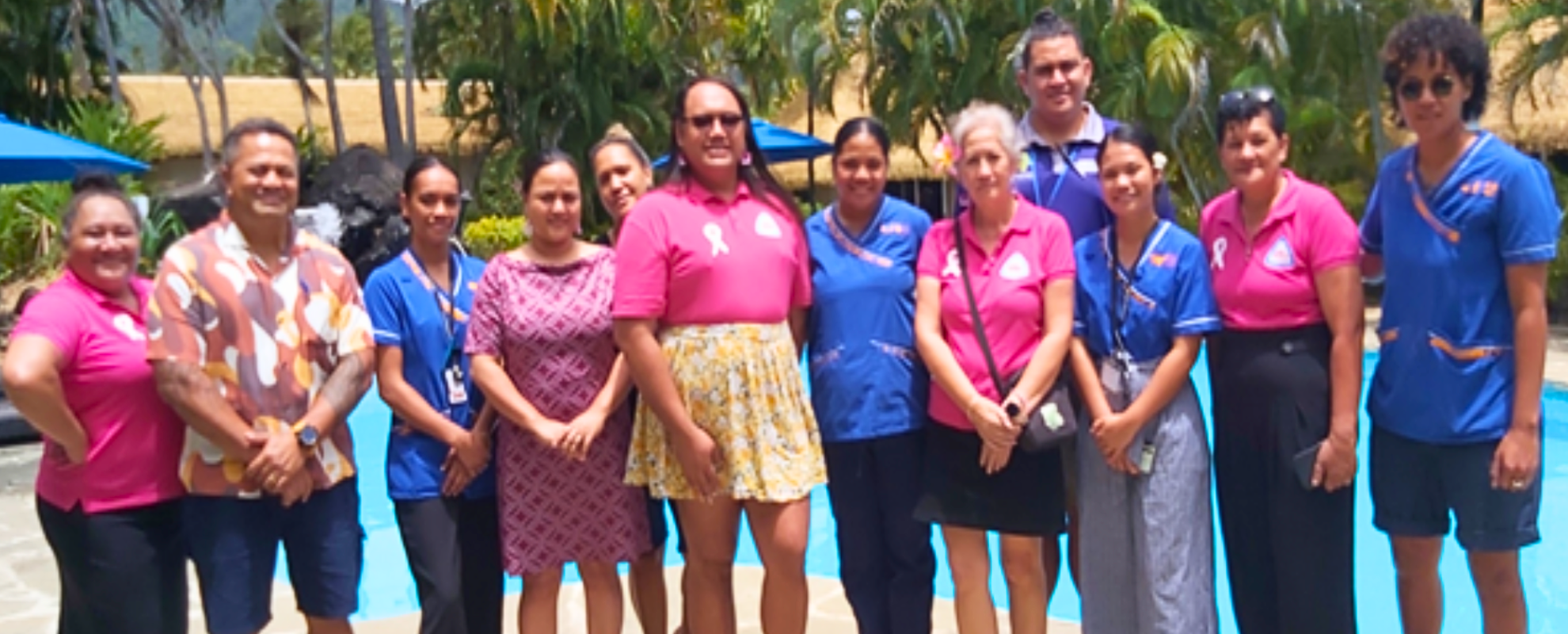
Ora’anga Meitaki no te Vainetini: Cook Islands Women’s Wellbeing in the Context of Abortion
Ora’anga Meitaki no te Vainetini: Cook Islands Women’s Wellbeing in the Context of Abortion includes the lived experiences and stories of women, advocates, support persons and health workers in the Cook Islands and Aotearoa New Zealand. The report discusses abortion, including unsafe abortion, in the Pacific islands. The report also details the Cook Islands and how this research was conducted in the Cook Islands.
Resource
| 14 June 2026
Ora’anga Meitaki no te Vainetini: Cook Islands Women’s Wellbeing in the Context of Abortion
Ora’anga Meitaki no te Vainetini: Cook Islands Women’s Wellbeing in the Context of Abortion includes the lived experiences and stories of women, advocates, support persons and health workers in the Cook Islands and Aotearoa New Zealand. The report discusses abortion, including unsafe abortion, in the Pacific islands. The report also details the Cook Islands and how this research was conducted in the Cook Islands.
Resource
| 16 December 2025
Gender Equality, Disability and Social Inclusion (GEDSI) analyses for nine (9) Pacific Member Associations
The International Planned Parenthood Federation (IPPF) is a global movement of over 100 locally led Member Associations working in more than 150 countries to advance Sexual and Reproductive Health, Rights, and Justice (SRHRJ). In the Pacific, IPPF’s Sub-Regional Office is implementing the Pacific Niu Vaka Strategy Phase II (2023–2028), which prioritises Gender Equality, Disability and Social Inclusion (GEDSI) across Member Associations. In 2025, IPPF supported eight Pacific Member Associations from Fiji, Kiribati, Papua New Guinea, Samoa, Solomon Islands, Tonga, Tuvalu, and Vanuatu to complete a GEDSI analysis, building on a 2023 pilot with the Cook Islands Family Welfare Association. The revised GEDSI tools use a five-step process, including self-assessment, baseline scoring, action planning, and stakeholder consultation, to track progress over time. All nine Pacific Member Associations scored above 50% in their baseline GEDSI self-assessments, demonstrating active engagement with inclusion principles. Member Associations in the Cook Islands, Kiribati, and Samoa scored above 80%, reflecting strong organisational integration of GEDSI across programmes and services. Gender equality scored highest overall, while disability inclusion emerged as a key area for strengthening across the region. A total of 218 participants from 106 organisations took part in GEDSI and SRHR stakeholder consultations across nine Pacific countries, strengthening locally grounded analysis and action planning. These assessments have enhanced understanding of how gender, power, and social inclusion shape access to SRHR services. The GEDSI analyses mark an important first step. Sustained investment in human and financial resources over the next three years will be essential to implement action plans and demonstrate measurable progress when the assessments are repeated in 2028. This work contributes to the Pacific Niu Vaka Strategy Phase II results framework and is co-funded through the Pacific Women Lead programme with support from the Australian Department of Foreign Affairs and Trade (DFAT) and the New Zealand Ministry of Foreign Affairs and Trade (MFAT).
Resource
| 16 December 2025
Gender Equality, Disability and Social Inclusion (GEDSI) analyses for nine (9) Pacific Member Associations
The International Planned Parenthood Federation (IPPF) is a global movement of over 100 locally led Member Associations working in more than 150 countries to advance Sexual and Reproductive Health, Rights, and Justice (SRHRJ). In the Pacific, IPPF’s Sub-Regional Office is implementing the Pacific Niu Vaka Strategy Phase II (2023–2028), which prioritises Gender Equality, Disability and Social Inclusion (GEDSI) across Member Associations. In 2025, IPPF supported eight Pacific Member Associations from Fiji, Kiribati, Papua New Guinea, Samoa, Solomon Islands, Tonga, Tuvalu, and Vanuatu to complete a GEDSI analysis, building on a 2023 pilot with the Cook Islands Family Welfare Association. The revised GEDSI tools use a five-step process, including self-assessment, baseline scoring, action planning, and stakeholder consultation, to track progress over time. All nine Pacific Member Associations scored above 50% in their baseline GEDSI self-assessments, demonstrating active engagement with inclusion principles. Member Associations in the Cook Islands, Kiribati, and Samoa scored above 80%, reflecting strong organisational integration of GEDSI across programmes and services. Gender equality scored highest overall, while disability inclusion emerged as a key area for strengthening across the region. A total of 218 participants from 106 organisations took part in GEDSI and SRHR stakeholder consultations across nine Pacific countries, strengthening locally grounded analysis and action planning. These assessments have enhanced understanding of how gender, power, and social inclusion shape access to SRHR services. The GEDSI analyses mark an important first step. Sustained investment in human and financial resources over the next three years will be essential to implement action plans and demonstrate measurable progress when the assessments are repeated in 2028. This work contributes to the Pacific Niu Vaka Strategy Phase II results framework and is co-funded through the Pacific Women Lead programme with support from the Australian Department of Foreign Affairs and Trade (DFAT) and the New Zealand Ministry of Foreign Affairs and Trade (MFAT).
Resource
| 26 November 2025
Research: How religious, cultural, and traditional practices influence access to sexual and reproductive health and rights in Fiji
A community-based research conducted across urban, peri-urban, rural and maritime settings, and captures the voices and experiences of youth, women, sex workers, and people with disabilities. Key messages from the research findings include Advancing SRHR reform strengthens families, builds safer communities, and drives national economic growth. Failure to act perpetuates cycles of violence, illness, exclusion, and intergenerational poverty, leaving teenagers alone to struggle with silence, stigma, and shame. Fiji already has local champions and effective, home-grown solutions—what’s needed is greater support and sustained investment. Timely SRHR reforms will yield measurable improvements in health, social well-being, and economic prosperity. By embracing rights-based, culturally grounded SRHR policies, Fiji can position itself as a regional leader and role model.
Resource
| 27 November 2025
Research: How religious, cultural, and traditional practices influence access to sexual and reproductive health and rights in Fiji
A community-based research conducted across urban, peri-urban, rural and maritime settings, and captures the voices and experiences of youth, women, sex workers, and people with disabilities. Key messages from the research findings include Advancing SRHR reform strengthens families, builds safer communities, and drives national economic growth. Failure to act perpetuates cycles of violence, illness, exclusion, and intergenerational poverty, leaving teenagers alone to struggle with silence, stigma, and shame. Fiji already has local champions and effective, home-grown solutions—what’s needed is greater support and sustained investment. Timely SRHR reforms will yield measurable improvements in health, social well-being, and economic prosperity. By embracing rights-based, culturally grounded SRHR policies, Fiji can position itself as a regional leader and role model.
Resource
| 18 June 2025
Annual Report 2023-2024
This year’s annual report captures a powerful year of action, resilience, and care across East and Southeast Asia and the Pacific. Despite rising challenges, IPPF ESEAOR and its Member Associations delivered over 13 million SRHR services, expanded access for youth and marginalised groups, deepened community partnerships, and pushed for policy change across 24 countries. Grounded in the Come Together strategy, the report celebrates feminist solidarity, youth leadership, climate-resilient healthcare, and bold innovation in the face of growing anti-rights movements.
Resource
| 09 June 2025
Annual Report 2023-2024
This year’s annual report captures a powerful year of action, resilience, and care across East and Southeast Asia and the Pacific. Despite rising challenges, IPPF ESEAOR and its Member Associations delivered over 13 million SRHR services, expanded access for youth and marginalised groups, deepened community partnerships, and pushed for policy change across 24 countries. Grounded in the Come Together strategy, the report celebrates feminist solidarity, youth leadership, climate-resilient healthcare, and bold innovation in the face of growing anti-rights movements.
Resource
| 09 June 2025
Pacific Niu Vaka Strategy: 2024 Annual Report
Niu Vaka Strategy: Driving Sustainable SRHR Progress in the Pacific Now in its second phase, the Pacific Niu Vaka Strategy continues to deliver locally led, sustainable sexual and reproductive health and rights (SRHR) services across the region. At the heart of the strategy is IPPF’s commitment to inclusive, resilient, and community-rooted action, ensuring that those most marginalised and excluded can access the care and information they need. Local Leadership, Real Results IPPF’s unique, localised approach remains central to achieving lasting impact. Member Associations (MAs) are trusted by their communities and have a profound understanding of the social and cultural challenges faced by women, girls, and marginalised groups. In 2024 alone, Pacific MAs delivered over 507,000 SRH services to more than 126,000 clients – 70% of whom were women and girls, and 35% under the age of 25. These services were provided through a combination of static clinics (59%), mobile outreach (35%), and community-based distribution (6%). A Multi-layered, People-First Strategy Building on the lessons from Phase I, Niu Vaka II continues to prioritise reaching the most underserved populations, elevating youth voices, and harnessing partnerships to advocate for systemic change. Key focus areas for 2024 include: Strengthening regional partnerships and advocacy to increase the visibility of IPPF and MAs Amplifying youth voices, including the launch of the Pacific SRHR Youth Network – Youth OCEANS Enhancing MA funding compliance and financial processes Building national capacity to deliver essential training in SGBV and humanitarian SRH care (MISP) Youth at the Forefront Young people constitute nearly a quarter of the Pacific’s population, many of whom experience unmet SRHR needs. In a significant milestone, the region launched Youth OCEANS – the first Pacific-wide sexual and reproductive health and rights (SRHR) youth network – during its inaugural convening in Fiji in August 2024. Youth leaders from nine countries came together to establish a leadership committee, outline priorities, and create a clear path forward for advocacy. Additional funding from Pacific Women Lead at the Pacific Community (SPC) programme will support the network’s expansion in 2025. Looking Ahead In a rapidly evolving global and regional context, IPPF Pacific remains focused on inclusive, resilient, and adaptive SRHR programming. By linking humanitarian and development efforts, championing local leadership, and centring the voices of women, young people, and marginalised communities, Niu Vaka continues to deliver tangible progress for everyone in the Pacific. This work is made possible by the ongoing support of the Australian Department of Foreign Affairs and Trade (DFAT) and the New Zealand Ministry of Foreign Affairs and Trade (MFAT).
Resource
| 14 June 2026
Pacific Niu Vaka Strategy: 2024 Annual Report
Niu Vaka Strategy: Driving Sustainable SRHR Progress in the Pacific Now in its second phase, the Pacific Niu Vaka Strategy continues to deliver locally led, sustainable sexual and reproductive health and rights (SRHR) services across the region. At the heart of the strategy is IPPF’s commitment to inclusive, resilient, and community-rooted action, ensuring that those most marginalised and excluded can access the care and information they need. Local Leadership, Real Results IPPF’s unique, localised approach remains central to achieving lasting impact. Member Associations (MAs) are trusted by their communities and have a profound understanding of the social and cultural challenges faced by women, girls, and marginalised groups. In 2024 alone, Pacific MAs delivered over 507,000 SRH services to more than 126,000 clients – 70% of whom were women and girls, and 35% under the age of 25. These services were provided through a combination of static clinics (59%), mobile outreach (35%), and community-based distribution (6%). A Multi-layered, People-First Strategy Building on the lessons from Phase I, Niu Vaka II continues to prioritise reaching the most underserved populations, elevating youth voices, and harnessing partnerships to advocate for systemic change. Key focus areas for 2024 include: Strengthening regional partnerships and advocacy to increase the visibility of IPPF and MAs Amplifying youth voices, including the launch of the Pacific SRHR Youth Network – Youth OCEANS Enhancing MA funding compliance and financial processes Building national capacity to deliver essential training in SGBV and humanitarian SRH care (MISP) Youth at the Forefront Young people constitute nearly a quarter of the Pacific’s population, many of whom experience unmet SRHR needs. In a significant milestone, the region launched Youth OCEANS – the first Pacific-wide sexual and reproductive health and rights (SRHR) youth network – during its inaugural convening in Fiji in August 2024. Youth leaders from nine countries came together to establish a leadership committee, outline priorities, and create a clear path forward for advocacy. Additional funding from Pacific Women Lead at the Pacific Community (SPC) programme will support the network’s expansion in 2025. Looking Ahead In a rapidly evolving global and regional context, IPPF Pacific remains focused on inclusive, resilient, and adaptive SRHR programming. By linking humanitarian and development efforts, championing local leadership, and centring the voices of women, young people, and marginalised communities, Niu Vaka continues to deliver tangible progress for everyone in the Pacific. This work is made possible by the ongoing support of the Australian Department of Foreign Affairs and Trade (DFAT) and the New Zealand Ministry of Foreign Affairs and Trade (MFAT).
Resource
| 19 May 2025
Navigating SRHRJ in Asia Pacific: A Practical Guide to Ethical Reporting & Content Creation for Media Practitioners
In a rapidly shifting sociopolitical landscape where sexual and reproductive health, rights, and justice (SRHRJ) are increasingly contested, media professionals play a critical role in safeguarding democratic discourse and amplifying marginalised voices. Navigating Sexual and Reproductive Health, Rights & Justice in Asia Pacific: A Practical Guide to Ethical Reporting & Content Creation for Media Practitioners, developed by the International Planned Parenthood Federation East, South East Asia and Oceania Region (IPPF ESEAOR) and the Asia-Pacific Institute for Broadcasting Development (AIBD), offers an essential framework for ethical, feminist-focused journalism in the Asia-Pacific region. This partnership brought together 50 media professionals from 17 countries across the Asia-Pacific region contributing to shaping this resource and making it a practical tool for journalists covering sexual and reproductive health, rights, and justice (SRHRJ).
Resource
| 19 May 2025
Navigating SRHRJ in Asia Pacific: A Practical Guide to Ethical Reporting & Content Creation for Media Practitioners
In a rapidly shifting sociopolitical landscape where sexual and reproductive health, rights, and justice (SRHRJ) are increasingly contested, media professionals play a critical role in safeguarding democratic discourse and amplifying marginalised voices. Navigating Sexual and Reproductive Health, Rights & Justice in Asia Pacific: A Practical Guide to Ethical Reporting & Content Creation for Media Practitioners, developed by the International Planned Parenthood Federation East, South East Asia and Oceania Region (IPPF ESEAOR) and the Asia-Pacific Institute for Broadcasting Development (AIBD), offers an essential framework for ethical, feminist-focused journalism in the Asia-Pacific region. This partnership brought together 50 media professionals from 17 countries across the Asia-Pacific region contributing to shaping this resource and making it a practical tool for journalists covering sexual and reproductive health, rights, and justice (SRHRJ).
Resource
| 27 March 2025
Ora’anga Meitaki no te Vainetini: Cook Islands Women’s Wellbeing in the Context of Abortion
Ora’anga Meitaki no te Vainetini: Cook Islands Women’s Wellbeing in the Context of Abortion includes the lived experiences and stories of women, advocates, support persons and health workers in the Cook Islands and Aotearoa New Zealand. The report discusses abortion, including unsafe abortion, in the Pacific islands. The report also details the Cook Islands and how this research was conducted in the Cook Islands.
Resource
| 14 June 2026
Ora’anga Meitaki no te Vainetini: Cook Islands Women’s Wellbeing in the Context of Abortion
Ora’anga Meitaki no te Vainetini: Cook Islands Women’s Wellbeing in the Context of Abortion includes the lived experiences and stories of women, advocates, support persons and health workers in the Cook Islands and Aotearoa New Zealand. The report discusses abortion, including unsafe abortion, in the Pacific islands. The report also details the Cook Islands and how this research was conducted in the Cook Islands.
