



Latest press releases
A selection of stories from across the Federation

Media center
International Safe Abortion Day 2025
On 28 September, International Safe Abortion Day, we unite in #AbortionSolidarity. Across Asia Pacific and the world, we come together to demand safe, legal, stigma-free, and accessible abortion for all.


media center
| 26 November 2025
Media Release: IPPF and Includovate launch the results of a qualitative research study on sexual and reproductive health and rights in Fiji
Suva, Fiji – As the world observes the annual 16 Days of Activism against Gender-Based Violence, IPPF Sub-Regional Office for the Pacific (SROP) and Includovate Pty Ltd are launching the results of a qualitative research study on sexual and reproductive health and rights (SRHR) in Fiji at the Novotel, Queens Road, Lami Bay, Suva. The study titled “How religious, cultural, and traditional practices influence access to sexual and reproductive health and rights in Fiji” used a community-based participatory research approach to explore the factors that impact access to SRHR in Fiji. It centers the voices and experiences of youth, women, sex workers, and people with disabilities across six communities in urban, peri-urban, rural and maritime areas. The study reveals the powerful ways in which intersecting social norms, faith teachings, and harmful gendered traditions reinforce silence, stigma, and exclusion, while also identifying pathways for positive change grounded in lived realities and experiences of emerging community champions. It provides data-driven direction for policy and programming to advance SRHR in Fiji. It also highlights the innovative strategies used by women leaders, peer educators, and allies who are creating safer spaces for SRHR education, autonomy, and advocacy. The recommendations reflect the realities of Fiji’s evolving social landscape, offering pragmatic, locally led solutions to longstanding SRHR challenges and identifying opportunities for policymakers, advocates, and donors to support and scale ongoing efforts. Key messages from the research findings include Advancing SRHR reform strengthens families, builds safer communities, and drives national economic growth. Failure to act perpetuates cycles of violence, illness, exclusion, and intergenerational poverty, leaving teenagers alone to struggle with silence, stigma, and shame. Fiji already has local champions and effective, home-grown solutions—what’s needed is greater support and sustained investment. Timely SRHR reforms will yield measurable improvements in health, social well-being, and economic prosperity. By embracing rights-based, culturally grounded SRHR policies, Fiji can position itself as a regional leader and role model. This research report was made possible by a grant from the Pacific Women Lead, and was co-funded under the IPPF Pacific Niu Vaka Phase II strategy through the Australian Department of Foreign Affairs and Trade (DFAT) and New Zealand Ministry of Foreign Affairs and Trade (MFAT). Includovate led the research with oversight from the IPPF Sub-Regional Office for the Pacific. For media enquiries or further information, please contact [email protected]
media_center
| 27 November 2025
Media Release: IPPF and Includovate launch the results of a qualitative research study on sexual and reproductive health and rights in Fiji
Suva, Fiji – As the world observes the annual 16 Days of Activism against Gender-Based Violence, IPPF Sub-Regional Office for the Pacific (SROP) and Includovate Pty Ltd are launching the results of a qualitative research study on sexual and reproductive health and rights (SRHR) in Fiji at the Novotel, Queens Road, Lami Bay, Suva. The study titled “How religious, cultural, and traditional practices influence access to sexual and reproductive health and rights in Fiji” used a community-based participatory research approach to explore the factors that impact access to SRHR in Fiji. It centers the voices and experiences of youth, women, sex workers, and people with disabilities across six communities in urban, peri-urban, rural and maritime areas. The study reveals the powerful ways in which intersecting social norms, faith teachings, and harmful gendered traditions reinforce silence, stigma, and exclusion, while also identifying pathways for positive change grounded in lived realities and experiences of emerging community champions. It provides data-driven direction for policy and programming to advance SRHR in Fiji. It also highlights the innovative strategies used by women leaders, peer educators, and allies who are creating safer spaces for SRHR education, autonomy, and advocacy. The recommendations reflect the realities of Fiji’s evolving social landscape, offering pragmatic, locally led solutions to longstanding SRHR challenges and identifying opportunities for policymakers, advocates, and donors to support and scale ongoing efforts. Key messages from the research findings include Advancing SRHR reform strengthens families, builds safer communities, and drives national economic growth. Failure to act perpetuates cycles of violence, illness, exclusion, and intergenerational poverty, leaving teenagers alone to struggle with silence, stigma, and shame. Fiji already has local champions and effective, home-grown solutions—what’s needed is greater support and sustained investment. Timely SRHR reforms will yield measurable improvements in health, social well-being, and economic prosperity. By embracing rights-based, culturally grounded SRHR policies, Fiji can position itself as a regional leader and role model. This research report was made possible by a grant from the Pacific Women Lead, and was co-funded under the IPPF Pacific Niu Vaka Phase II strategy through the Australian Department of Foreign Affairs and Trade (DFAT) and New Zealand Ministry of Foreign Affairs and Trade (MFAT). Includovate led the research with oversight from the IPPF Sub-Regional Office for the Pacific. For media enquiries or further information, please contact [email protected]
media center
| 22 October 2025
Media Statement: No Girl Should Feel Unsafe in School, Malaysia
The Federation of Reproductive Health Associations, Malaysia (FRHAM) and the International Planned Parenthood Federation East & South East Asia and Oceania Region (IPPF ESEAOR) express deep concern and sadness over the recent reports of gender-based violence in Malaysian schools, involving school-aged girls. These incidents highlight a worsening crisis in youth development: one deeply rooted in systemic gender inequality and harmful socio-cultural norms. FRHAM and IPPF ESEAOR emphasise that these recent reports of femicide and violence are not isolated. They are pressing symptoms of broader societal challenges, highlighting the loss of empathy, and the consequences of harmful gender norms. We are witnessing the harmful rise of online subcultures such as the “red-pill” and “incel” movements, which glorify misogyny, dominance, and violence, while simultaneously dehumanizing and demeaning women and girls, and promoting unrealistic, stereotypical gender roles. These ideologies, when coupled with a systemic lack of support for our youths, can create a volatile and dangerous environment where young people struggle to form healthy identities, manage emotions or resolve conflict constructively. FRHAM and IPPF ESEAOR call for the nationwide implementation of age-appropriate and culturally sensitive Comprehensive Sexuality Education (CSE) throughout adolescence. We continue to strongly advocate, as we have done for decades, for the implementation of this proven, rights-based approach that helps young people understand bodily autonomy, consent, and gender equality. CSE nurtures gender-positive attitudes and values such as empathy, consent, respect, emotional regulation and healthy relationships. CSE also fosters critical thinking and resilience, which, in turn, empower our young people to reject toxic narratives and harmful online influences and to seek support from appropriate sources. In addition, we emphasise that young people must be at the centre of this conversation. We must ensure substantive and meaningful participation of young people in all interventions, policies, and laws designed for them. We also urge a societal, united response that prioritizes gender equality and the prevention, education and enforcement against gender-based violence (GBV), which includes the creation of safe spaces in schools through health education and counselling support for students, fostering empathy, communication, and digital literacy at home and prevent the spread of misogynistic and violent content online targeting youth. In the face of these heartbreaking and horrible tragedies, FRHAM and IPPF ESEAOR express our sympathies and condolences to the parents, families, teachers and students for their untimely losses and pain. Safeguarding our nation’s future starts with investing in the physical, mental, emotional, and social well-being of our youth today. We stand ready to provide our expertise and support to work towards a better future with the government, educators, and civil society to strengthen community-based interventions and promote holistic education that nurtures emotional intelligence, respect, and equality. All spaces, from homes to classrooms, must be safe for all. For media enquiries, please contact: FRHAM: Eden-Joy Kalom, Executive Director, [email protected] IPPF ESEAOR: Natassha Kaur, Regional Communications, Voice and Media Advisor, [email protected] Media Statement is also available for download below.
media center
| 28 June 2025
In Solidarity With and Within LGBTQIA+ Communities Across East Asia, Southeast Asia, and Oceania
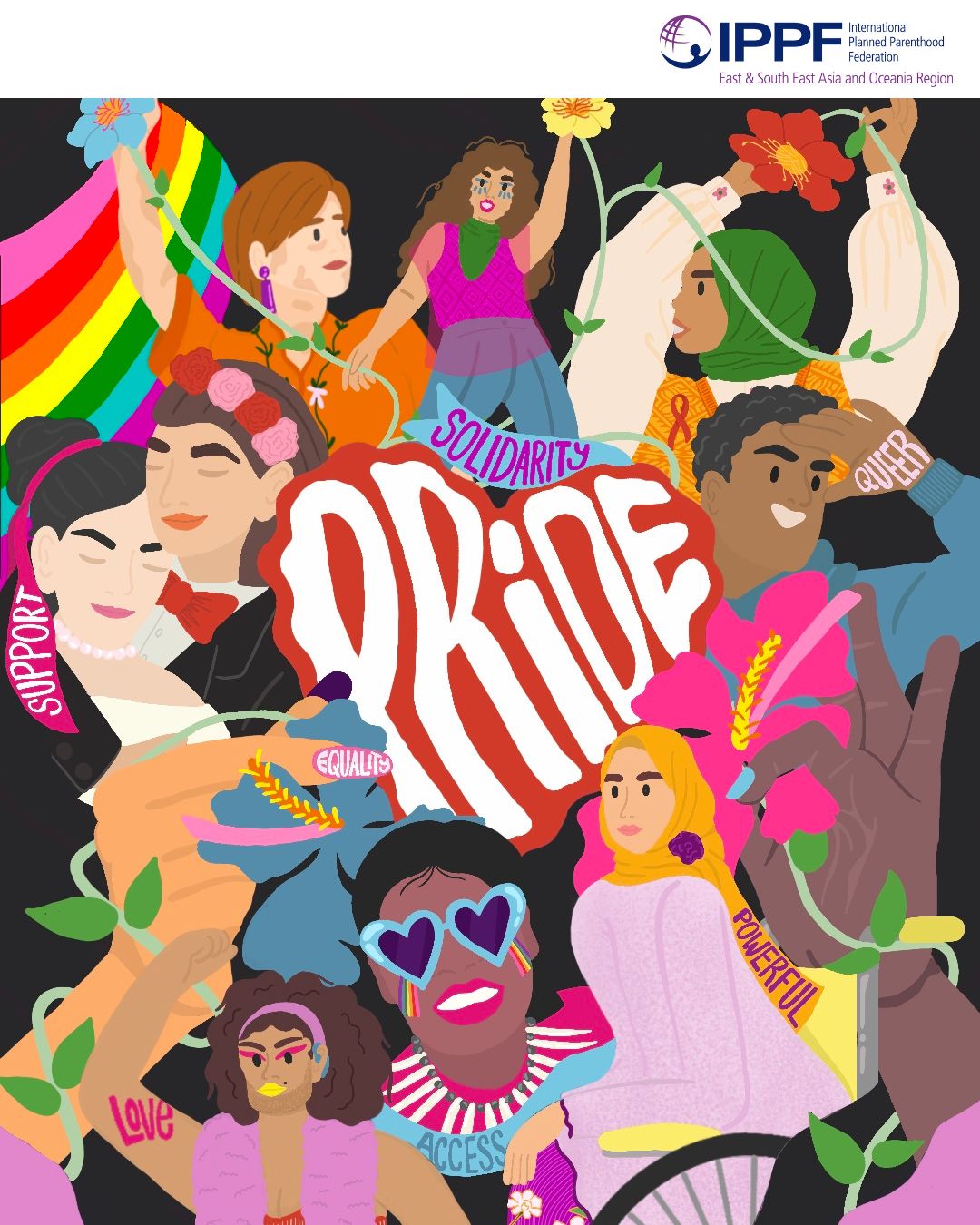
This Pride Month, the International Planned Parenthood Federation East and South East Asia and Oceania Region (IPPF ESEAOR) proudly stands in full, resounding solidarity with the powerful and resilient lesbian, gay, bisexual, transgender, queer/ questioning, intersex, asexual and other diverse sexual orientations or gender identities (LGBTQIA+) communities across East Asia, Southeast Asia, and the Pacific. As allies and members of this community, we join in celebrating not only visibility, diversity, and love, but also the enduring strength of collective resistance in the face of stigma, discrimination, and the ongoing demonisation of people with diverse sexual orientations, gender identities and expressions, and sex characteristics (SOGIESC). Pride is a celebration and a living practice of resistance and defiance. We honour the roots of this global movement, particularly the pivotal moment of uprising in the West marked by the Stonewall Riots in New York in 1969. It was a monumental act of rebellion led by trans women of colour and queer people pushed to the margins. While Western-led, this movement catalysed a global wave of organising that continues to inspire and empower LGBTQIA+ activism to this day. Within the growing and diverse LGBTQIA+ movements, we recognise many victories: decriminalisation, legal gender recognition, and marriage equality, particularly in Western nations. We also recognise the support within the movement as it built momentum globally, enabling LGBTQIA+ organisations in the Global South to strengthen advocacy, leadership, and sustainability through capacity building and financial support.
media_center
| 28 June 2025
In Solidarity With and Within LGBTQIA+ Communities Across East Asia, Southeast Asia, and Oceania
This Pride Month, the International Planned Parenthood Federation East and South East Asia and Oceania Region (IPPF ESEAOR) proudly stands in full, resounding solidarity with the powerful and resilient lesbian, gay, bisexual, transgender, queer/ questioning, intersex, asexual and other diverse sexual orientations or gender identities (LGBTQIA+) communities across East Asia, Southeast Asia, and the Pacific. As allies and members of this community, we join in celebrating not only visibility, diversity, and love, but also the enduring strength of collective resistance in the face of stigma, discrimination, and the ongoing demonisation of people with diverse sexual orientations, gender identities and expressions, and sex characteristics (SOGIESC). Pride is a celebration and a living practice of resistance and defiance. We honour the roots of this global movement, particularly the pivotal moment of uprising in the West marked by the Stonewall Riots in New York in 1969. It was a monumental act of rebellion led by trans women of colour and queer people pushed to the margins. While Western-led, this movement catalysed a global wave of organising that continues to inspire and empower LGBTQIA+ activism to this day. Within the growing and diverse LGBTQIA+ movements, we recognise many victories: decriminalisation, legal gender recognition, and marriage equality, particularly in Western nations. We also recognise the support within the movement as it built momentum globally, enabling LGBTQIA+ organisations in the Global South to strengthen advocacy, leadership, and sustainability through capacity building and financial support.
media center
| 26 November 2025
Media Release: IPPF and Includovate launch the results of a qualitative research study on sexual and reproductive health and rights in Fiji
Suva, Fiji – As the world observes the annual 16 Days of Activism against Gender-Based Violence, IPPF Sub-Regional Office for the Pacific (SROP) and Includovate Pty Ltd are launching the results of a qualitative research study on sexual and reproductive health and rights (SRHR) in Fiji at the Novotel, Queens Road, Lami Bay, Suva. The study titled “How religious, cultural, and traditional practices influence access to sexual and reproductive health and rights in Fiji” used a community-based participatory research approach to explore the factors that impact access to SRHR in Fiji. It centers the voices and experiences of youth, women, sex workers, and people with disabilities across six communities in urban, peri-urban, rural and maritime areas. The study reveals the powerful ways in which intersecting social norms, faith teachings, and harmful gendered traditions reinforce silence, stigma, and exclusion, while also identifying pathways for positive change grounded in lived realities and experiences of emerging community champions. It provides data-driven direction for policy and programming to advance SRHR in Fiji. It also highlights the innovative strategies used by women leaders, peer educators, and allies who are creating safer spaces for SRHR education, autonomy, and advocacy. The recommendations reflect the realities of Fiji’s evolving social landscape, offering pragmatic, locally led solutions to longstanding SRHR challenges and identifying opportunities for policymakers, advocates, and donors to support and scale ongoing efforts. Key messages from the research findings include Advancing SRHR reform strengthens families, builds safer communities, and drives national economic growth. Failure to act perpetuates cycles of violence, illness, exclusion, and intergenerational poverty, leaving teenagers alone to struggle with silence, stigma, and shame. Fiji already has local champions and effective, home-grown solutions—what’s needed is greater support and sustained investment. Timely SRHR reforms will yield measurable improvements in health, social well-being, and economic prosperity. By embracing rights-based, culturally grounded SRHR policies, Fiji can position itself as a regional leader and role model. This research report was made possible by a grant from the Pacific Women Lead, and was co-funded under the IPPF Pacific Niu Vaka Phase II strategy through the Australian Department of Foreign Affairs and Trade (DFAT) and New Zealand Ministry of Foreign Affairs and Trade (MFAT). Includovate led the research with oversight from the IPPF Sub-Regional Office for the Pacific. For media enquiries or further information, please contact [email protected]
media_center
| 27 November 2025
Media Release: IPPF and Includovate launch the results of a qualitative research study on sexual and reproductive health and rights in Fiji
Suva, Fiji – As the world observes the annual 16 Days of Activism against Gender-Based Violence, IPPF Sub-Regional Office for the Pacific (SROP) and Includovate Pty Ltd are launching the results of a qualitative research study on sexual and reproductive health and rights (SRHR) in Fiji at the Novotel, Queens Road, Lami Bay, Suva. The study titled “How religious, cultural, and traditional practices influence access to sexual and reproductive health and rights in Fiji” used a community-based participatory research approach to explore the factors that impact access to SRHR in Fiji. It centers the voices and experiences of youth, women, sex workers, and people with disabilities across six communities in urban, peri-urban, rural and maritime areas. The study reveals the powerful ways in which intersecting social norms, faith teachings, and harmful gendered traditions reinforce silence, stigma, and exclusion, while also identifying pathways for positive change grounded in lived realities and experiences of emerging community champions. It provides data-driven direction for policy and programming to advance SRHR in Fiji. It also highlights the innovative strategies used by women leaders, peer educators, and allies who are creating safer spaces for SRHR education, autonomy, and advocacy. The recommendations reflect the realities of Fiji’s evolving social landscape, offering pragmatic, locally led solutions to longstanding SRHR challenges and identifying opportunities for policymakers, advocates, and donors to support and scale ongoing efforts. Key messages from the research findings include Advancing SRHR reform strengthens families, builds safer communities, and drives national economic growth. Failure to act perpetuates cycles of violence, illness, exclusion, and intergenerational poverty, leaving teenagers alone to struggle with silence, stigma, and shame. Fiji already has local champions and effective, home-grown solutions—what’s needed is greater support and sustained investment. Timely SRHR reforms will yield measurable improvements in health, social well-being, and economic prosperity. By embracing rights-based, culturally grounded SRHR policies, Fiji can position itself as a regional leader and role model. This research report was made possible by a grant from the Pacific Women Lead, and was co-funded under the IPPF Pacific Niu Vaka Phase II strategy through the Australian Department of Foreign Affairs and Trade (DFAT) and New Zealand Ministry of Foreign Affairs and Trade (MFAT). Includovate led the research with oversight from the IPPF Sub-Regional Office for the Pacific. For media enquiries or further information, please contact [email protected]
media center
| 22 October 2025
Media Statement: No Girl Should Feel Unsafe in School, Malaysia
The Federation of Reproductive Health Associations, Malaysia (FRHAM) and the International Planned Parenthood Federation East & South East Asia and Oceania Region (IPPF ESEAOR) express deep concern and sadness over the recent reports of gender-based violence in Malaysian schools, involving school-aged girls. These incidents highlight a worsening crisis in youth development: one deeply rooted in systemic gender inequality and harmful socio-cultural norms. FRHAM and IPPF ESEAOR emphasise that these recent reports of femicide and violence are not isolated. They are pressing symptoms of broader societal challenges, highlighting the loss of empathy, and the consequences of harmful gender norms. We are witnessing the harmful rise of online subcultures such as the “red-pill” and “incel” movements, which glorify misogyny, dominance, and violence, while simultaneously dehumanizing and demeaning women and girls, and promoting unrealistic, stereotypical gender roles. These ideologies, when coupled with a systemic lack of support for our youths, can create a volatile and dangerous environment where young people struggle to form healthy identities, manage emotions or resolve conflict constructively. FRHAM and IPPF ESEAOR call for the nationwide implementation of age-appropriate and culturally sensitive Comprehensive Sexuality Education (CSE) throughout adolescence. We continue to strongly advocate, as we have done for decades, for the implementation of this proven, rights-based approach that helps young people understand bodily autonomy, consent, and gender equality. CSE nurtures gender-positive attitudes and values such as empathy, consent, respect, emotional regulation and healthy relationships. CSE also fosters critical thinking and resilience, which, in turn, empower our young people to reject toxic narratives and harmful online influences and to seek support from appropriate sources. In addition, we emphasise that young people must be at the centre of this conversation. We must ensure substantive and meaningful participation of young people in all interventions, policies, and laws designed for them. We also urge a societal, united response that prioritizes gender equality and the prevention, education and enforcement against gender-based violence (GBV), which includes the creation of safe spaces in schools through health education and counselling support for students, fostering empathy, communication, and digital literacy at home and prevent the spread of misogynistic and violent content online targeting youth. In the face of these heartbreaking and horrible tragedies, FRHAM and IPPF ESEAOR express our sympathies and condolences to the parents, families, teachers and students for their untimely losses and pain. Safeguarding our nation’s future starts with investing in the physical, mental, emotional, and social well-being of our youth today. We stand ready to provide our expertise and support to work towards a better future with the government, educators, and civil society to strengthen community-based interventions and promote holistic education that nurtures emotional intelligence, respect, and equality. All spaces, from homes to classrooms, must be safe for all. For media enquiries, please contact: FRHAM: Eden-Joy Kalom, Executive Director, [email protected] IPPF ESEAOR: Natassha Kaur, Regional Communications, Voice and Media Advisor, [email protected] Media Statement is also available for download below.
media center
| 28 June 2025
In Solidarity With and Within LGBTQIA+ Communities Across East Asia, Southeast Asia, and Oceania
This Pride Month, the International Planned Parenthood Federation East and South East Asia and Oceania Region (IPPF ESEAOR) proudly stands in full, resounding solidarity with the powerful and resilient lesbian, gay, bisexual, transgender, queer/ questioning, intersex, asexual and other diverse sexual orientations or gender identities (LGBTQIA+) communities across East Asia, Southeast Asia, and the Pacific. As allies and members of this community, we join in celebrating not only visibility, diversity, and love, but also the enduring strength of collective resistance in the face of stigma, discrimination, and the ongoing demonisation of people with diverse sexual orientations, gender identities and expressions, and sex characteristics (SOGIESC). Pride is a celebration and a living practice of resistance and defiance. We honour the roots of this global movement, particularly the pivotal moment of uprising in the West marked by the Stonewall Riots in New York in 1969. It was a monumental act of rebellion led by trans women of colour and queer people pushed to the margins. While Western-led, this movement catalysed a global wave of organising that continues to inspire and empower LGBTQIA+ activism to this day. Within the growing and diverse LGBTQIA+ movements, we recognise many victories: decriminalisation, legal gender recognition, and marriage equality, particularly in Western nations. We also recognise the support within the movement as it built momentum globally, enabling LGBTQIA+ organisations in the Global South to strengthen advocacy, leadership, and sustainability through capacity building and financial support.
media_center
| 28 June 2025
In Solidarity With and Within LGBTQIA+ Communities Across East Asia, Southeast Asia, and Oceania
This Pride Month, the International Planned Parenthood Federation East and South East Asia and Oceania Region (IPPF ESEAOR) proudly stands in full, resounding solidarity with the powerful and resilient lesbian, gay, bisexual, transgender, queer/ questioning, intersex, asexual and other diverse sexual orientations or gender identities (LGBTQIA+) communities across East Asia, Southeast Asia, and the Pacific. As allies and members of this community, we join in celebrating not only visibility, diversity, and love, but also the enduring strength of collective resistance in the face of stigma, discrimination, and the ongoing demonisation of people with diverse sexual orientations, gender identities and expressions, and sex characteristics (SOGIESC). Pride is a celebration and a living practice of resistance and defiance. We honour the roots of this global movement, particularly the pivotal moment of uprising in the West marked by the Stonewall Riots in New York in 1969. It was a monumental act of rebellion led by trans women of colour and queer people pushed to the margins. While Western-led, this movement catalysed a global wave of organising that continues to inspire and empower LGBTQIA+ activism to this day. Within the growing and diverse LGBTQIA+ movements, we recognise many victories: decriminalisation, legal gender recognition, and marriage equality, particularly in Western nations. We also recognise the support within the movement as it built momentum globally, enabling LGBTQIA+ organisations in the Global South to strengthen advocacy, leadership, and sustainability through capacity building and financial support.
