



Spotlight
A selection of resources from across the Federation

Cook Islands, New Zealand
Resource
Ora’anga Meitaki no te Vainetini: Cook Islands Women’s Wellbeing in the Context of Abortion
In 2022, research on abortion, including unsafe abortion, in Cook Islands was conducted by the University of New South Wales, University of the South Pacific Cook Islands Campus Te Puna Vai Mārama | Centre for Research, and Cook Islands Family Welfare Association (CIFWA). Ora’anga Meitaki no te Vainetini: Cook Islands Women’s Wellbeing in the Context of Abortion includes the lived experiences and stories of women, advocates, support persons and health workers in the Cook Islands and Aotearoa New Zealand.
Filter our resources by:

Resource
| 20 May 2026
Anticipating, responding to, and mitigating the impact of anti-rights narratives on SRHR in Asia and the Pacific
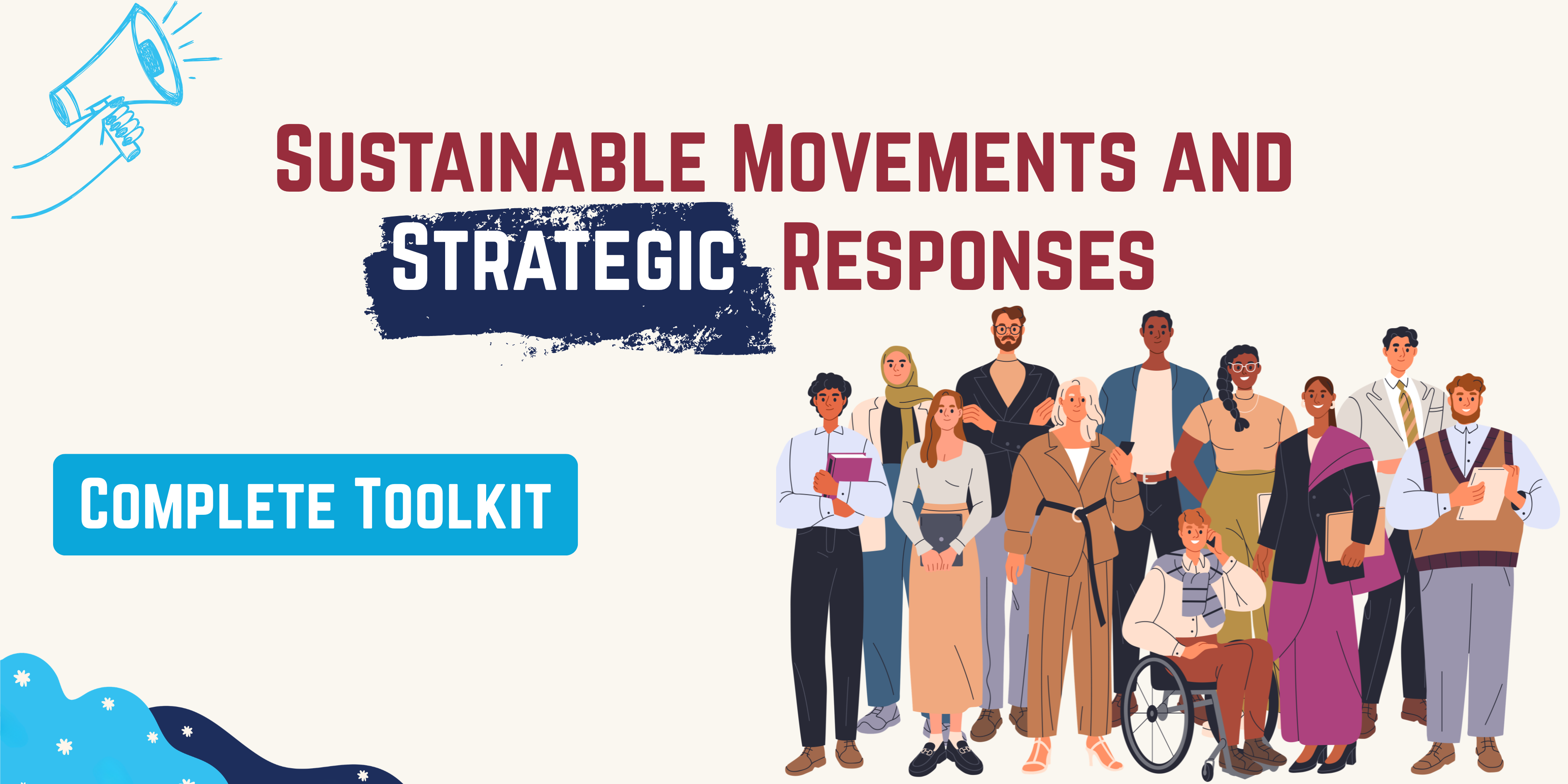
This Toolkit is designed to guide and equip SRHR defenders and advocates working in poorly funded, hostile, or opposing environments with the tools necessary to sustain their movement and strategise responses. This Toolkit is a cohesive guidance document, complete with practical tools, to assist individuals and groups working in SRHR at both the national and regional levels to anticipate, respond to, and mitigate the impact of anti-rights narratives on SRHR in Asia and the Pacific. This Toolkit offers approaches and guidance for assessing, addressing, and responding to these growing threats through strategic foresight and evidence-based advocacy, to strengthen SRHR movements and support the fulfilment of the International Conference on Population and Development Programme of Action (ICPD PoA) across the region. The Toolkit contains two modules: Sustainable Movements – guidance on how to monitor and analyse trends as well as protect our own Strategic Response – guidance on message making, identification of opponents, and engagement of intersectional allies. This Toolkit was developed under the technical guidance of the Technical Advisory Group (TAG) for the Asia Pacific Regional Mechanism to advance ICPD beyond 2025. The TAG consisted of representatives from Asia Pacific Alliance for Sexual and Reproductive Health and Rights (APA), Asian-Pacific Resource & Research Centre for Women (ARROW), Development Alternatives with Women for a New Era (DAWN), International Planned Parenthood Federation East and South East Asia & Oceania (IPPF ESEAOR), FP2030 Asia - Pacific Hub, MSI Reproductive Choices, and in partnership with UNFPA, the United Nations Population Fund in Asia and the Pacific.
Resource
| 29 April 2026
Anticipating, responding to, and mitigating the impact of anti-rights narratives on SRHR in Asia and the Pacific
This Toolkit is designed to guide and equip SRHR defenders and advocates working in poorly funded, hostile, or opposing environments with the tools necessary to sustain their movement and strategise responses. This Toolkit is a cohesive guidance document, complete with practical tools, to assist individuals and groups working in SRHR at both the national and regional levels to anticipate, respond to, and mitigate the impact of anti-rights narratives on SRHR in Asia and the Pacific. This Toolkit offers approaches and guidance for assessing, addressing, and responding to these growing threats through strategic foresight and evidence-based advocacy, to strengthen SRHR movements and support the fulfilment of the International Conference on Population and Development Programme of Action (ICPD PoA) across the region. The Toolkit contains two modules: Sustainable Movements – guidance on how to monitor and analyse trends as well as protect our own Strategic Response – guidance on message making, identification of opponents, and engagement of intersectional allies. This Toolkit was developed under the technical guidance of the Technical Advisory Group (TAG) for the Asia Pacific Regional Mechanism to advance ICPD beyond 2025. The TAG consisted of representatives from Asia Pacific Alliance for Sexual and Reproductive Health and Rights (APA), Asian-Pacific Resource & Research Centre for Women (ARROW), Development Alternatives with Women for a New Era (DAWN), International Planned Parenthood Federation East and South East Asia & Oceania (IPPF ESEAOR), FP2030 Asia - Pacific Hub, MSI Reproductive Choices, and in partnership with UNFPA, the United Nations Population Fund in Asia and the Pacific.

Resource
| 29 April 2026
Pleasurenesia: Pacific Youth’s Voyage of Pleasure
Pleasurenesia: A Pasifika Guide to Talking About Pleasure is a Pacific-led, youth-driven framework that supports conversations about pleasure as part of holistic sexual and relational well-being. Pleasure is framed relationally, not as an individual pursuit, and is closely connected to consent, safety, communication, dignity and care for self and others. The Guide focuses on how to discuss pleasure rather than prescribe behaviours, and is designed to support facilitators in engaging young people with confidence across diverse Pacific contexts.
Resource
| 29 April 2026
Pleasurenesia: Pacific Youth’s Voyage of Pleasure
Pleasurenesia: A Pasifika Guide to Talking About Pleasure is a Pacific-led, youth-driven framework that supports conversations about pleasure as part of holistic sexual and relational well-being. Pleasure is framed relationally, not as an individual pursuit, and is closely connected to consent, safety, communication, dignity and care for self and others. The Guide focuses on how to discuss pleasure rather than prescribe behaviours, and is designed to support facilitators in engaging young people with confidence across diverse Pacific contexts.
Resource
| 29 April 2026
Pacific SRHR Youth Strategy 2026 - 2033
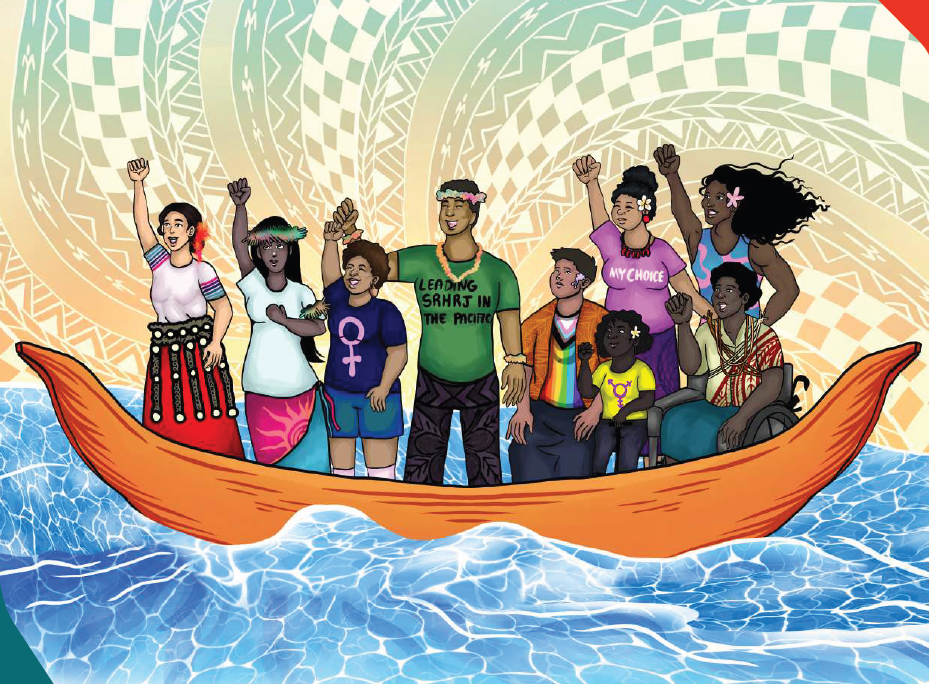
The Pacific SRHR Youth Strategy 2026 - 2033 is a landmark 7-year, Pacific-led, youth-centred programme spanning 10 Pacific Island countries and 10 Member Associations. It addresses one of the most pressing and underfunded development challenges in the Pacific. Case in point is the systematic denial of SRHR to adolescents and young people aged 10-24 years.
Resource
| 29 April 2026
Pacific SRHR Youth Strategy 2026 - 2033
The Pacific SRHR Youth Strategy 2026 - 2033 is a landmark 7-year, Pacific-led, youth-centred programme spanning 10 Pacific Island countries and 10 Member Associations. It addresses one of the most pressing and underfunded development challenges in the Pacific. Case in point is the systematic denial of SRHR to adolescents and young people aged 10-24 years.
Resource
| 15 April 2026
Shaping Positive SRHR Narratives in Asia and the Pacific
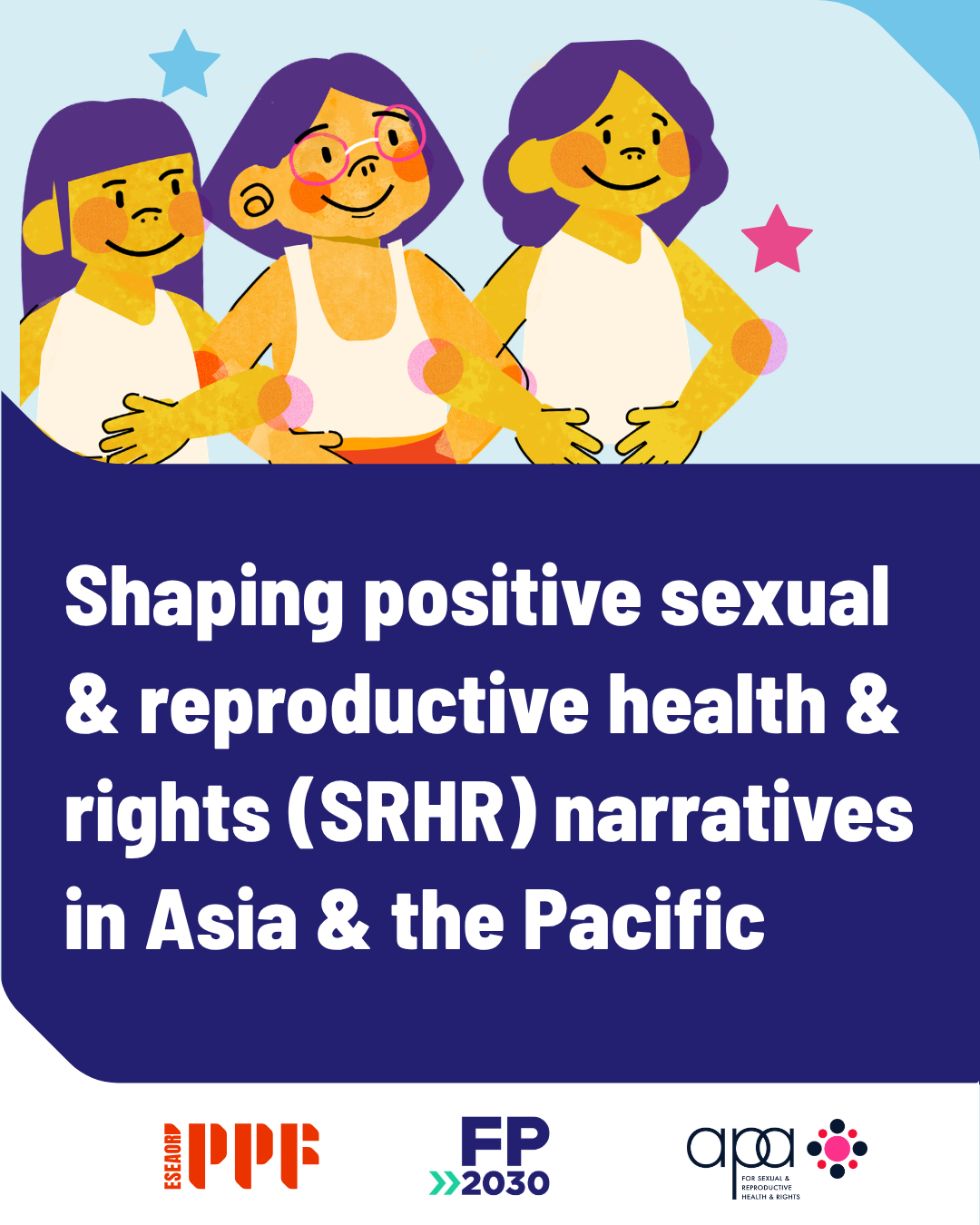
Across Asia and the Pacific, conversations around sexual and reproductive health and rights (SRHR) are becoming increasingly contested. In recent years, we’ve seen a rise in anti-rights and anti-gender messaging, often driven by misinformation and designed to create fear and division. In this context, how we talk about SRHR, and whose voices are heard, matters more than ever. Shaping Positive SRHR Narratives in Asia and the Pacific: A Toolkit to Support Advocates and Allies toolkit was developed to support advocates, partners, and allies in shaping positive, people-centred narratives that resonate across the region’s diverse communities. Drawing on the experiences of those working on the ground, it aims to help strengthen understanding and build broader support for bodily autonomy and access to essential SRH care, including modern contraception—especially for marginalised and oppressed groups. This toolkit centres on the broader public conversation. It offers practical ways to reframe how SRHR is understood and discussed, grounding messages in lived realities, shared values, and the everyday experiences of people and communities. At its core, this is about shifting the narrative—towards one that affirms dignity, choice, and rights for all.
Resource
| 15 April 2026
Shaping Positive SRHR Narratives in Asia and the Pacific
Across Asia and the Pacific, conversations around sexual and reproductive health and rights (SRHR) are becoming increasingly contested. In recent years, we’ve seen a rise in anti-rights and anti-gender messaging, often driven by misinformation and designed to create fear and division. In this context, how we talk about SRHR, and whose voices are heard, matters more than ever. Shaping Positive SRHR Narratives in Asia and the Pacific: A Toolkit to Support Advocates and Allies toolkit was developed to support advocates, partners, and allies in shaping positive, people-centred narratives that resonate across the region’s diverse communities. Drawing on the experiences of those working on the ground, it aims to help strengthen understanding and build broader support for bodily autonomy and access to essential SRH care, including modern contraception—especially for marginalised and oppressed groups. This toolkit centres on the broader public conversation. It offers practical ways to reframe how SRHR is understood and discussed, grounding messages in lived realities, shared values, and the everyday experiences of people and communities. At its core, this is about shifting the narrative—towards one that affirms dignity, choice, and rights for all.

Resource
| 16 December 2025
Gender Equality, Disability and Social Inclusion (GEDSI) analyses for nine (9) Pacific Member Associations
The International Planned Parenthood Federation (IPPF) is a global movement of over 100 locally led Member Associations working in more than 150 countries to advance Sexual and Reproductive Health, Rights, and Justice (SRHRJ). In the Pacific, IPPF’s Sub-Regional Office is implementing the Pacific Niu Vaka Strategy Phase II (2023–2028), which prioritises Gender Equality, Disability and Social Inclusion (GEDSI) across Member Associations. In 2025, IPPF supported eight Pacific Member Associations from Fiji, Kiribati, Papua New Guinea, Samoa, Solomon Islands, Tonga, Tuvalu, and Vanuatu to complete a GEDSI analysis, building on a 2023 pilot with the Cook Islands Family Welfare Association. The revised GEDSI tools use a five-step process, including self-assessment, baseline scoring, action planning, and stakeholder consultation, to track progress over time. All nine Pacific Member Associations scored above 50% in their baseline GEDSI self-assessments, demonstrating active engagement with inclusion principles. Member Associations in the Cook Islands, Kiribati, and Samoa scored above 80%, reflecting strong organisational integration of GEDSI across programmes and services. Gender equality scored highest overall, while disability inclusion emerged as a key area for strengthening across the region. A total of 218 participants from 106 organisations took part in GEDSI and SRHR stakeholder consultations across nine Pacific countries, strengthening locally grounded analysis and action planning. These assessments have enhanced understanding of how gender, power, and social inclusion shape access to SRHR services. The GEDSI analyses mark an important first step. Sustained investment in human and financial resources over the next three years will be essential to implement action plans and demonstrate measurable progress when the assessments are repeated in 2028. This work contributes to the Pacific Niu Vaka Strategy Phase II results framework and is co-funded through the Pacific Women Lead programme with support from the Australian Department of Foreign Affairs and Trade (DFAT) and the New Zealand Ministry of Foreign Affairs and Trade (MFAT).
Resource
| 16 December 2025
Gender Equality, Disability and Social Inclusion (GEDSI) analyses for nine (9) Pacific Member Associations
The International Planned Parenthood Federation (IPPF) is a global movement of over 100 locally led Member Associations working in more than 150 countries to advance Sexual and Reproductive Health, Rights, and Justice (SRHRJ). In the Pacific, IPPF’s Sub-Regional Office is implementing the Pacific Niu Vaka Strategy Phase II (2023–2028), which prioritises Gender Equality, Disability and Social Inclusion (GEDSI) across Member Associations. In 2025, IPPF supported eight Pacific Member Associations from Fiji, Kiribati, Papua New Guinea, Samoa, Solomon Islands, Tonga, Tuvalu, and Vanuatu to complete a GEDSI analysis, building on a 2023 pilot with the Cook Islands Family Welfare Association. The revised GEDSI tools use a five-step process, including self-assessment, baseline scoring, action planning, and stakeholder consultation, to track progress over time. All nine Pacific Member Associations scored above 50% in their baseline GEDSI self-assessments, demonstrating active engagement with inclusion principles. Member Associations in the Cook Islands, Kiribati, and Samoa scored above 80%, reflecting strong organisational integration of GEDSI across programmes and services. Gender equality scored highest overall, while disability inclusion emerged as a key area for strengthening across the region. A total of 218 participants from 106 organisations took part in GEDSI and SRHR stakeholder consultations across nine Pacific countries, strengthening locally grounded analysis and action planning. These assessments have enhanced understanding of how gender, power, and social inclusion shape access to SRHR services. The GEDSI analyses mark an important first step. Sustained investment in human and financial resources over the next three years will be essential to implement action plans and demonstrate measurable progress when the assessments are repeated in 2028. This work contributes to the Pacific Niu Vaka Strategy Phase II results framework and is co-funded through the Pacific Women Lead programme with support from the Australian Department of Foreign Affairs and Trade (DFAT) and the New Zealand Ministry of Foreign Affairs and Trade (MFAT).

Resource
| 26 November 2025
Research: How religious, cultural, and traditional practices influence access to sexual and reproductive health and rights in Fiji
A community-based research conducted across urban, peri-urban, rural and maritime settings, and captures the voices and experiences of youth, women, sex workers, and people with disabilities. Key messages from the research findings include Advancing SRHR reform strengthens families, builds safer communities, and drives national economic growth. Failure to act perpetuates cycles of violence, illness, exclusion, and intergenerational poverty, leaving teenagers alone to struggle with silence, stigma, and shame. Fiji already has local champions and effective, home-grown solutions—what’s needed is greater support and sustained investment. Timely SRHR reforms will yield measurable improvements in health, social well-being, and economic prosperity. By embracing rights-based, culturally grounded SRHR policies, Fiji can position itself as a regional leader and role model.
Resource
| 27 November 2025
Research: How religious, cultural, and traditional practices influence access to sexual and reproductive health and rights in Fiji
A community-based research conducted across urban, peri-urban, rural and maritime settings, and captures the voices and experiences of youth, women, sex workers, and people with disabilities. Key messages from the research findings include Advancing SRHR reform strengthens families, builds safer communities, and drives national economic growth. Failure to act perpetuates cycles of violence, illness, exclusion, and intergenerational poverty, leaving teenagers alone to struggle with silence, stigma, and shame. Fiji already has local champions and effective, home-grown solutions—what’s needed is greater support and sustained investment. Timely SRHR reforms will yield measurable improvements in health, social well-being, and economic prosperity. By embracing rights-based, culturally grounded SRHR policies, Fiji can position itself as a regional leader and role model.
Resource
| 20 May 2026
Anticipating, responding to, and mitigating the impact of anti-rights narratives on SRHR in Asia and the Pacific
This Toolkit is designed to guide and equip SRHR defenders and advocates working in poorly funded, hostile, or opposing environments with the tools necessary to sustain their movement and strategise responses. This Toolkit is a cohesive guidance document, complete with practical tools, to assist individuals and groups working in SRHR at both the national and regional levels to anticipate, respond to, and mitigate the impact of anti-rights narratives on SRHR in Asia and the Pacific. This Toolkit offers approaches and guidance for assessing, addressing, and responding to these growing threats through strategic foresight and evidence-based advocacy, to strengthen SRHR movements and support the fulfilment of the International Conference on Population and Development Programme of Action (ICPD PoA) across the region. The Toolkit contains two modules: Sustainable Movements – guidance on how to monitor and analyse trends as well as protect our own Strategic Response – guidance on message making, identification of opponents, and engagement of intersectional allies. This Toolkit was developed under the technical guidance of the Technical Advisory Group (TAG) for the Asia Pacific Regional Mechanism to advance ICPD beyond 2025. The TAG consisted of representatives from Asia Pacific Alliance for Sexual and Reproductive Health and Rights (APA), Asian-Pacific Resource & Research Centre for Women (ARROW), Development Alternatives with Women for a New Era (DAWN), International Planned Parenthood Federation East and South East Asia & Oceania (IPPF ESEAOR), FP2030 Asia - Pacific Hub, MSI Reproductive Choices, and in partnership with UNFPA, the United Nations Population Fund in Asia and the Pacific.
Resource
| 29 April 2026
Anticipating, responding to, and mitigating the impact of anti-rights narratives on SRHR in Asia and the Pacific
This Toolkit is designed to guide and equip SRHR defenders and advocates working in poorly funded, hostile, or opposing environments with the tools necessary to sustain their movement and strategise responses. This Toolkit is a cohesive guidance document, complete with practical tools, to assist individuals and groups working in SRHR at both the national and regional levels to anticipate, respond to, and mitigate the impact of anti-rights narratives on SRHR in Asia and the Pacific. This Toolkit offers approaches and guidance for assessing, addressing, and responding to these growing threats through strategic foresight and evidence-based advocacy, to strengthen SRHR movements and support the fulfilment of the International Conference on Population and Development Programme of Action (ICPD PoA) across the region. The Toolkit contains two modules: Sustainable Movements – guidance on how to monitor and analyse trends as well as protect our own Strategic Response – guidance on message making, identification of opponents, and engagement of intersectional allies. This Toolkit was developed under the technical guidance of the Technical Advisory Group (TAG) for the Asia Pacific Regional Mechanism to advance ICPD beyond 2025. The TAG consisted of representatives from Asia Pacific Alliance for Sexual and Reproductive Health and Rights (APA), Asian-Pacific Resource & Research Centre for Women (ARROW), Development Alternatives with Women for a New Era (DAWN), International Planned Parenthood Federation East and South East Asia & Oceania (IPPF ESEAOR), FP2030 Asia - Pacific Hub, MSI Reproductive Choices, and in partnership with UNFPA, the United Nations Population Fund in Asia and the Pacific.
Resource
| 29 April 2026
Pleasurenesia: Pacific Youth’s Voyage of Pleasure
Pleasurenesia: A Pasifika Guide to Talking About Pleasure is a Pacific-led, youth-driven framework that supports conversations about pleasure as part of holistic sexual and relational well-being. Pleasure is framed relationally, not as an individual pursuit, and is closely connected to consent, safety, communication, dignity and care for self and others. The Guide focuses on how to discuss pleasure rather than prescribe behaviours, and is designed to support facilitators in engaging young people with confidence across diverse Pacific contexts.
Resource
| 29 April 2026
Pleasurenesia: Pacific Youth’s Voyage of Pleasure
Pleasurenesia: A Pasifika Guide to Talking About Pleasure is a Pacific-led, youth-driven framework that supports conversations about pleasure as part of holistic sexual and relational well-being. Pleasure is framed relationally, not as an individual pursuit, and is closely connected to consent, safety, communication, dignity and care for self and others. The Guide focuses on how to discuss pleasure rather than prescribe behaviours, and is designed to support facilitators in engaging young people with confidence across diverse Pacific contexts.
Resource
| 29 April 2026
Pacific SRHR Youth Strategy 2026 - 2033
The Pacific SRHR Youth Strategy 2026 - 2033 is a landmark 7-year, Pacific-led, youth-centred programme spanning 10 Pacific Island countries and 10 Member Associations. It addresses one of the most pressing and underfunded development challenges in the Pacific. Case in point is the systematic denial of SRHR to adolescents and young people aged 10-24 years.
Resource
| 29 April 2026
Pacific SRHR Youth Strategy 2026 - 2033
The Pacific SRHR Youth Strategy 2026 - 2033 is a landmark 7-year, Pacific-led, youth-centred programme spanning 10 Pacific Island countries and 10 Member Associations. It addresses one of the most pressing and underfunded development challenges in the Pacific. Case in point is the systematic denial of SRHR to adolescents and young people aged 10-24 years.
Resource
| 15 April 2026
Shaping Positive SRHR Narratives in Asia and the Pacific
Across Asia and the Pacific, conversations around sexual and reproductive health and rights (SRHR) are becoming increasingly contested. In recent years, we’ve seen a rise in anti-rights and anti-gender messaging, often driven by misinformation and designed to create fear and division. In this context, how we talk about SRHR, and whose voices are heard, matters more than ever. Shaping Positive SRHR Narratives in Asia and the Pacific: A Toolkit to Support Advocates and Allies toolkit was developed to support advocates, partners, and allies in shaping positive, people-centred narratives that resonate across the region’s diverse communities. Drawing on the experiences of those working on the ground, it aims to help strengthen understanding and build broader support for bodily autonomy and access to essential SRH care, including modern contraception—especially for marginalised and oppressed groups. This toolkit centres on the broader public conversation. It offers practical ways to reframe how SRHR is understood and discussed, grounding messages in lived realities, shared values, and the everyday experiences of people and communities. At its core, this is about shifting the narrative—towards one that affirms dignity, choice, and rights for all.
Resource
| 15 April 2026
Shaping Positive SRHR Narratives in Asia and the Pacific
Across Asia and the Pacific, conversations around sexual and reproductive health and rights (SRHR) are becoming increasingly contested. In recent years, we’ve seen a rise in anti-rights and anti-gender messaging, often driven by misinformation and designed to create fear and division. In this context, how we talk about SRHR, and whose voices are heard, matters more than ever. Shaping Positive SRHR Narratives in Asia and the Pacific: A Toolkit to Support Advocates and Allies toolkit was developed to support advocates, partners, and allies in shaping positive, people-centred narratives that resonate across the region’s diverse communities. Drawing on the experiences of those working on the ground, it aims to help strengthen understanding and build broader support for bodily autonomy and access to essential SRH care, including modern contraception—especially for marginalised and oppressed groups. This toolkit centres on the broader public conversation. It offers practical ways to reframe how SRHR is understood and discussed, grounding messages in lived realities, shared values, and the everyday experiences of people and communities. At its core, this is about shifting the narrative—towards one that affirms dignity, choice, and rights for all.
Resource
| 16 December 2025
Gender Equality, Disability and Social Inclusion (GEDSI) analyses for nine (9) Pacific Member Associations
The International Planned Parenthood Federation (IPPF) is a global movement of over 100 locally led Member Associations working in more than 150 countries to advance Sexual and Reproductive Health, Rights, and Justice (SRHRJ). In the Pacific, IPPF’s Sub-Regional Office is implementing the Pacific Niu Vaka Strategy Phase II (2023–2028), which prioritises Gender Equality, Disability and Social Inclusion (GEDSI) across Member Associations. In 2025, IPPF supported eight Pacific Member Associations from Fiji, Kiribati, Papua New Guinea, Samoa, Solomon Islands, Tonga, Tuvalu, and Vanuatu to complete a GEDSI analysis, building on a 2023 pilot with the Cook Islands Family Welfare Association. The revised GEDSI tools use a five-step process, including self-assessment, baseline scoring, action planning, and stakeholder consultation, to track progress over time. All nine Pacific Member Associations scored above 50% in their baseline GEDSI self-assessments, demonstrating active engagement with inclusion principles. Member Associations in the Cook Islands, Kiribati, and Samoa scored above 80%, reflecting strong organisational integration of GEDSI across programmes and services. Gender equality scored highest overall, while disability inclusion emerged as a key area for strengthening across the region. A total of 218 participants from 106 organisations took part in GEDSI and SRHR stakeholder consultations across nine Pacific countries, strengthening locally grounded analysis and action planning. These assessments have enhanced understanding of how gender, power, and social inclusion shape access to SRHR services. The GEDSI analyses mark an important first step. Sustained investment in human and financial resources over the next three years will be essential to implement action plans and demonstrate measurable progress when the assessments are repeated in 2028. This work contributes to the Pacific Niu Vaka Strategy Phase II results framework and is co-funded through the Pacific Women Lead programme with support from the Australian Department of Foreign Affairs and Trade (DFAT) and the New Zealand Ministry of Foreign Affairs and Trade (MFAT).
Resource
| 16 December 2025
Gender Equality, Disability and Social Inclusion (GEDSI) analyses for nine (9) Pacific Member Associations
The International Planned Parenthood Federation (IPPF) is a global movement of over 100 locally led Member Associations working in more than 150 countries to advance Sexual and Reproductive Health, Rights, and Justice (SRHRJ). In the Pacific, IPPF’s Sub-Regional Office is implementing the Pacific Niu Vaka Strategy Phase II (2023–2028), which prioritises Gender Equality, Disability and Social Inclusion (GEDSI) across Member Associations. In 2025, IPPF supported eight Pacific Member Associations from Fiji, Kiribati, Papua New Guinea, Samoa, Solomon Islands, Tonga, Tuvalu, and Vanuatu to complete a GEDSI analysis, building on a 2023 pilot with the Cook Islands Family Welfare Association. The revised GEDSI tools use a five-step process, including self-assessment, baseline scoring, action planning, and stakeholder consultation, to track progress over time. All nine Pacific Member Associations scored above 50% in their baseline GEDSI self-assessments, demonstrating active engagement with inclusion principles. Member Associations in the Cook Islands, Kiribati, and Samoa scored above 80%, reflecting strong organisational integration of GEDSI across programmes and services. Gender equality scored highest overall, while disability inclusion emerged as a key area for strengthening across the region. A total of 218 participants from 106 organisations took part in GEDSI and SRHR stakeholder consultations across nine Pacific countries, strengthening locally grounded analysis and action planning. These assessments have enhanced understanding of how gender, power, and social inclusion shape access to SRHR services. The GEDSI analyses mark an important first step. Sustained investment in human and financial resources over the next three years will be essential to implement action plans and demonstrate measurable progress when the assessments are repeated in 2028. This work contributes to the Pacific Niu Vaka Strategy Phase II results framework and is co-funded through the Pacific Women Lead programme with support from the Australian Department of Foreign Affairs and Trade (DFAT) and the New Zealand Ministry of Foreign Affairs and Trade (MFAT).
Resource
| 26 November 2025
Research: How religious, cultural, and traditional practices influence access to sexual and reproductive health and rights in Fiji
A community-based research conducted across urban, peri-urban, rural and maritime settings, and captures the voices and experiences of youth, women, sex workers, and people with disabilities. Key messages from the research findings include Advancing SRHR reform strengthens families, builds safer communities, and drives national economic growth. Failure to act perpetuates cycles of violence, illness, exclusion, and intergenerational poverty, leaving teenagers alone to struggle with silence, stigma, and shame. Fiji already has local champions and effective, home-grown solutions—what’s needed is greater support and sustained investment. Timely SRHR reforms will yield measurable improvements in health, social well-being, and economic prosperity. By embracing rights-based, culturally grounded SRHR policies, Fiji can position itself as a regional leader and role model.
Resource
| 27 November 2025
Research: How religious, cultural, and traditional practices influence access to sexual and reproductive health and rights in Fiji
A community-based research conducted across urban, peri-urban, rural and maritime settings, and captures the voices and experiences of youth, women, sex workers, and people with disabilities. Key messages from the research findings include Advancing SRHR reform strengthens families, builds safer communities, and drives national economic growth. Failure to act perpetuates cycles of violence, illness, exclusion, and intergenerational poverty, leaving teenagers alone to struggle with silence, stigma, and shame. Fiji already has local champions and effective, home-grown solutions—what’s needed is greater support and sustained investment. Timely SRHR reforms will yield measurable improvements in health, social well-being, and economic prosperity. By embracing rights-based, culturally grounded SRHR policies, Fiji can position itself as a regional leader and role model.
